

Rural Insights for Philanthropy – In Kind Contributions: What Rural Project Budgets Don’t Show
IN KIND CONTRIBUTIONS: WHAT RURAL PROJECT BUDGETS DON’T SHOW
Rural Insights for Philanthropy
You’ve got to get involved… Go to your planning commission meeting. Go to your city council meeting… Get out of the bleachers and get on the playing field.
– Steve Weaver, Memphis (MI) Lions Club
By: Katie Brisson, Senior Director of Special Initiatives
August 2026
Through this series, Senior Director of Special Initiatives Katie Brisson shares stories and insights from rural communities across Southeast Michigan and Western New York. Each post highlights lessons from local leaders that can help shape more responsive and effective philanthropy.
As the Ralph C. Wilson, Jr. Foundation has been investing more intentionally in rural communities, one dynamic has quickly risen to the surface: local volunteers provide an incredible range of in-kind support to community projects and institutions.
We have seen, for example, architects providing design work pro bono, lawyers providing legal advice at no cost, and whole groups of residents organizing weekly maintenance of local parks. Accounting for these contributions reveals the true scale of the projects they support, and the full value communities are investing in them.
Some rural leaders question whether calculating and documenting these contributions is worth the effort, particularly when funders rarely ask about them. Others believe naming their value could help communities demonstrate local commitment, attract new resources and meet matching requirements. The Memphis Lions Club illustrates both the significance of these contributions and the difficulty of fully capturing them in a conventional project budget. The significant value of these contributions should not be underestimated.
The strength of the rural community is the strength of the people that are in it… You bring together a bunch of people with different interests, and all of them community service-minded, and it is amazing what they can do.
– Nancy Thompson, Memphis (MI) Lions Club
In the spring of 2025, staff from the Community Foundation for St. Clair County introduced us to leaders from the Memphis Lions Club and Youth Center. Memphis (MI) is located on a county line, with a portion of the city located in Macomb County and a portion in St. Clair County. It has a population of 1,000 people.
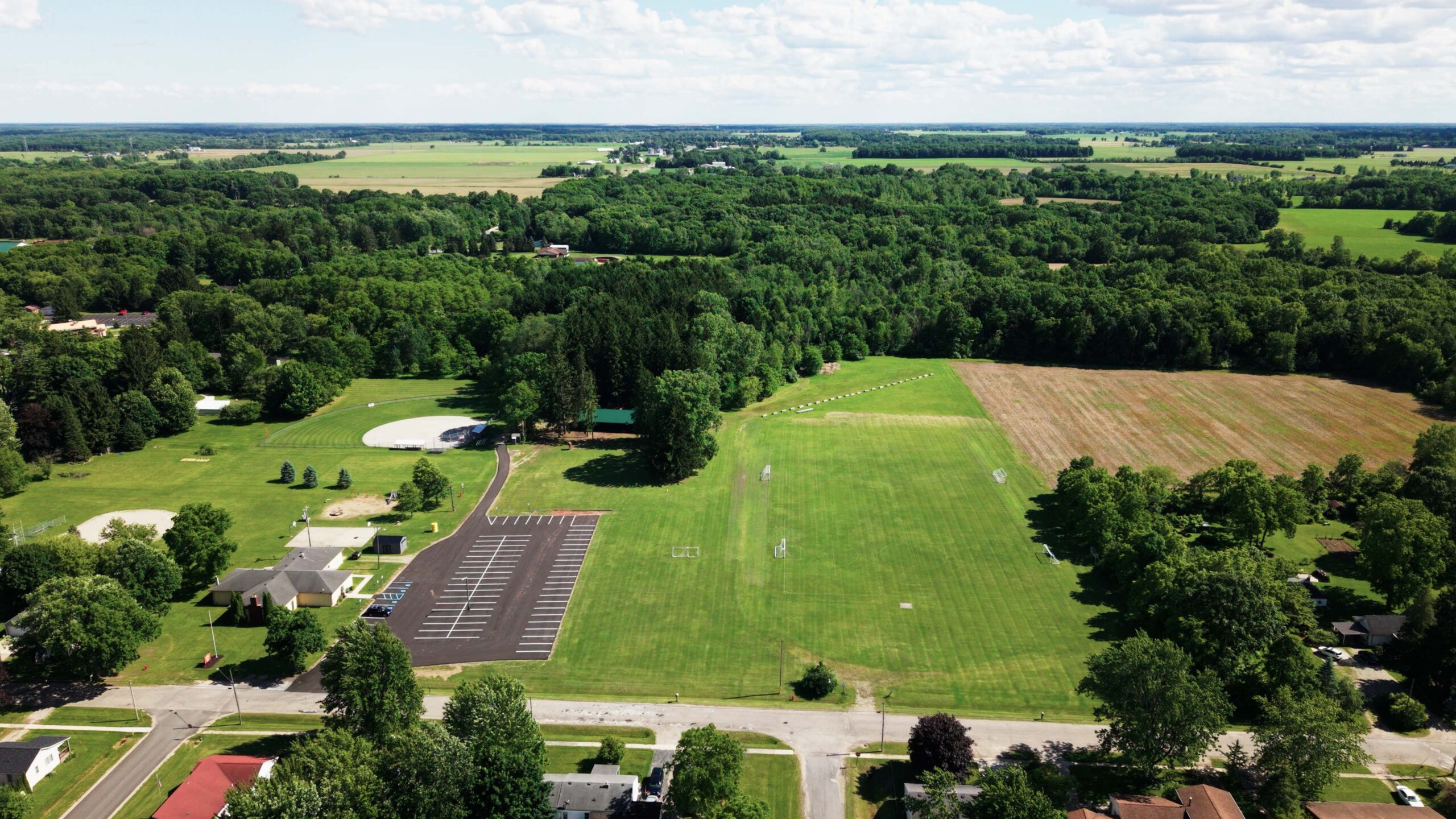
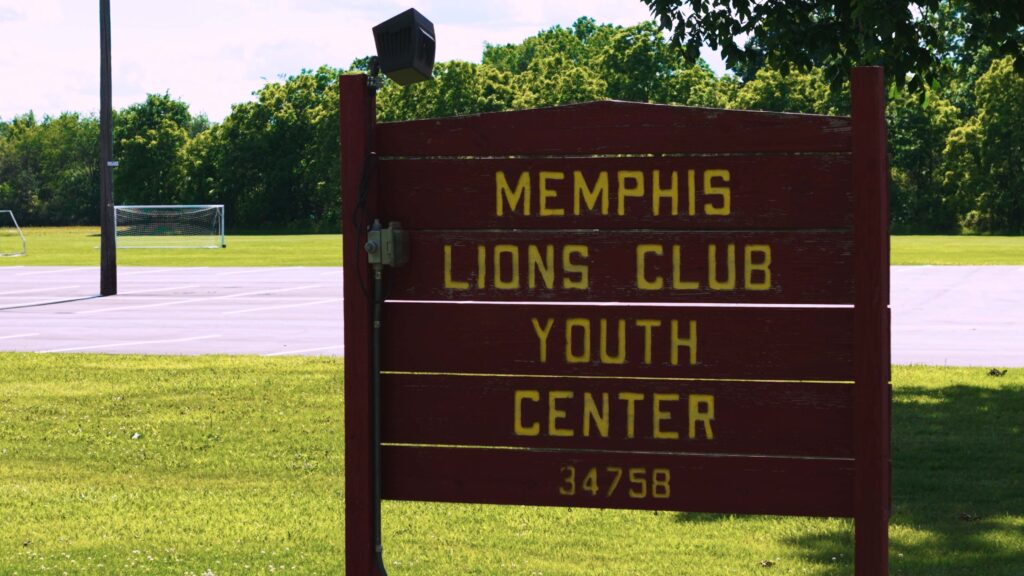
The Memphis Lions Club owns a 17-acre property in the heart of Memphis. The building is home to a wide range of community events, from holiday celebrations for seniors to city council meetings to local weddings. The outside property is home to the local soccer league, a “book trail” through the woods maintained by the local library, a pavilion, where summer concerts and events occur, and a playground.
The Memphis Community Schools building is also conveniently located just down the street and serves over 700 students from the surrounding area, many of whom participate in programming at the Lions Club property. The activities at the Memphis Lions Club attract a wide circle of people in nearby rural communities.
The Foundation recently provided a grant for significant capital upgrades to the Memphis Lions Club building and grounds. These improvements included paving the parking lot to improve access for people using strollers or wheelchairs, constructing an outdoor stage to reduce equipment rental costs for events, and completing other upgrades such as painting and replacing doors.
In this case, the Foundation’s grant supported improvements that required specialized expertise, materials and funding beyond what volunteers could reasonably provide. Although the organization operates with a modest budget, local leaders and residents contribute substantial in-kind support by maintaining the property and sustaining its programs. Recognizing the full value of those contributions helped us see how targeted grant dollars could go further and strengthen an already well-supported community asset.
It’s graduation parties, it’s funeral dinners. It’s where sports teams come. It truly is the definition of “community hub” in a rural community, because you don’t have options. You don’t have 10 different halls where you could host something. … Community hubs are important to be accessible, to be open, and to truly operate in a way that allows everyone to be welcome to do and gather and enjoy one another’s company in a space that feels comfortable.
– Jackie Hanton, Community Foundation for St. Clair County
We are heartened by rural leaders like those involved with the Memphis Lions Club, whose work is helping us see our investments differently. Their example demonstrates how targeted capital can complement the time, leadership and care residents already contribute. It has also encouraged us to think more flexibly about how needs within our priority areas show up in rural communities, and how Foundation funding can strengthen and advance the work local leaders and volunteers have sustained for years.

Katie Brisson serves as Senior Director of Special Initiatives at the Ralph C. Wilson, Jr. Foundation. In this role, she contributes to the strategic insight and leadership to the foundation’s grantmaking initiatives while advancing special projects that strengthen impact across portfolios.
Katie brings more than two decades of experience in philanthropy, having spent 24 years at the Community Foundation for Southeast Michigan, including 11 years as Vice President of Program. During her tenure, she led efforts to shape grantmaking strategy during a period of significant growth and played a key role in launching collaborative initiatives such as the Detroit Journalism Engagement Fund, the Michigan Opioid Partnership, and Project Play: Southeast Michigan.
Nonprofit Resources
Rural Insights for Philanthropy – Rural Libraries as Third Spaces
Rural Libraries as Third Spaces
Rural Insights for Philanthropy
Libraries are reinventing themselves and making sure that they stay relevant. They’re paying attention to the trends and the needs of the community.
– Deb Mikula, Consultant, The Library Network
By: Katie Brisson, Senior Director of Special Initiatives
July 2026
Through this series, Senior Director of Special Initiatives Katie Brisson shares stories and insights from rural communities across Southeast Michigan and Western New York. Each post highlights lessons from local leaders that can help shape more responsive and effective philanthropy.
In 2024, my colleague Maura Dewan and I visited with rural leaders from all 16 counties served by the Foundation. We wanted to be more thoughtful about how our Foundation could better reach rural communities, connected to our Foundation’s key areas of investment. One topic that came up in almost every single meeting was the importance of rural libraries as key partners.
In many cases, rural libraries were cited as one of the largest physical spaces in the community and a place where people from all walks of life come together for a variety of activities. They are a gathering place, a place to collaborate, and a place to serve people. Libraries are places for national or regional partners to connect with local leaders and host events. They are places that connect needed resources to communities.
The Foundation went on to make a couple of pilot grants in 2025 to rural libraries. We were amazed to learn all of the ways they connect to our Foundation’s areas of interest. Kayak lending programs, entrepreneur supports, and programming for caregivers just to name a few.
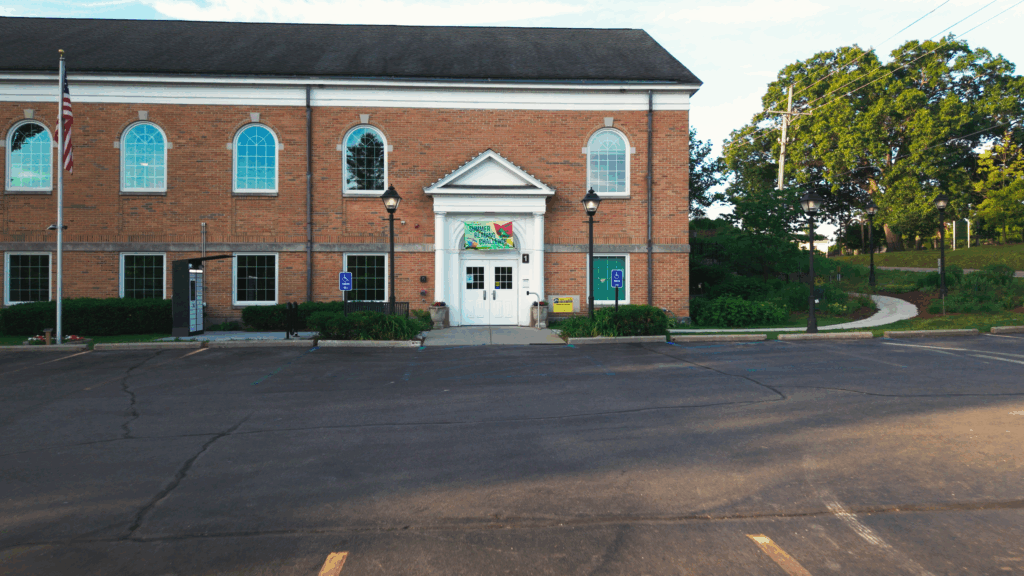
In the case of Cromaine Library in Hartland, Michigan – their community was eager to think about the outside of their building. How was this space best serving local residents?
We filled this room with about 60 people a few times and asked them what they want… what they want is the ability to come somewhere and do something together. They can access us online, they can read a book by themselves, but people are eager to have that spot… a community hub.
– Sarah Neidert, Cromaine Library (Hartland, MI)
Ultimately, the Cromaine library is undertaking a significant exterior space renovation on its South Lawn property that sits in the heart of historic downtown Hartland. The project will focus on major landscape upgrades and the construction of a new community pavilion, where Cromaine annually hosts thousands of community members in community programming, events, and concerts. A grant from the Ralph C. Wilson Jr. Foundation will help to build a children’s “free play” garden at one end of the property, close to the sizeable preschool next door. Incorporating input from its teen council, and in partnership with the local Garden club, the Children’s Garden will include outdoor musical instruments and weaving paths that encourage full-body motion.
In our age of technology and digital access… we are still seeing a ton of people coming into the building. While they’re accessing our digital services when that’s most convenient, they still want to be around other people… libraries have that unique role of being a third space.
– Liz Welch, Cromaine District Library (Hartland, MI)
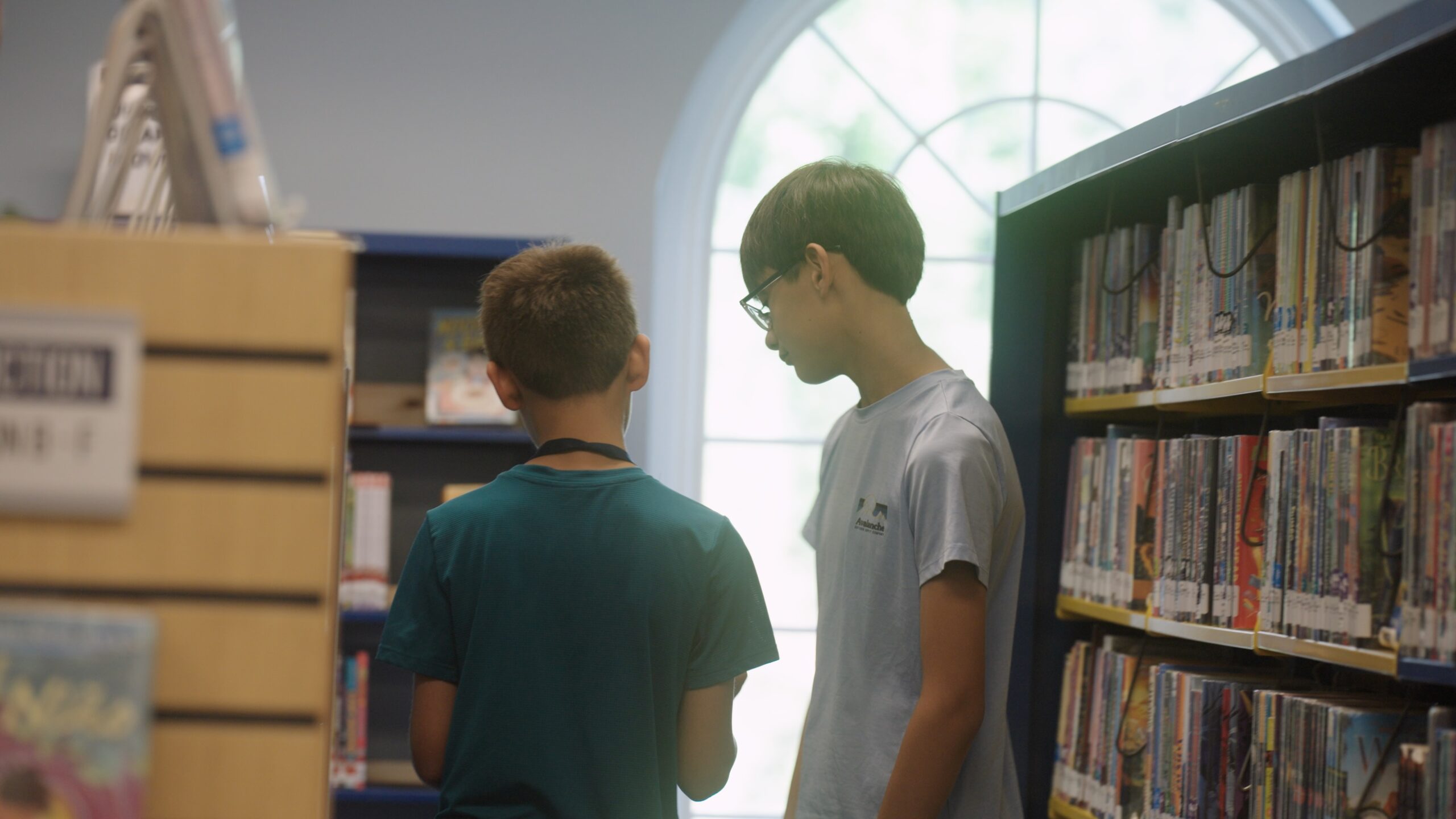
Building on the lessons learned from our pilot grants, the Foundation launched a program for Rural Libraries across Western New York and Southeast Michigan. The first round of grants was announced recently. We were delighted to see the many ways libraries serve as these third spaces, or places people gather apart from home and work. Grants to support the buildout of teen rooms. Grant for meeting spaces for local nonprofit organizations. Grants that allow for the lending of binoculars, kayaks, and sports equipment. Grants that allow for better technology support for tutors and students who use the spaces in the afterschool and summer hours.
We are grateful to our intermediary partners who are helping to oversee these important grant programs, and looking forward to future grant rounds. More information can be foundation at: The Library Network, for Southeast Michigan, and the Western New York Library Resources Council, for Western New York.
Katie Brisson serves as Senior Director of Special Initiatives at the Ralph C. Wilson, Jr. Foundation. In this role, she contributes to the strategic insight and leadership to the foundation’s grantmaking initiatives while advancing special projects that strengthen impact across portfolios.
Katie brings more than two decades of experience in philanthropy, having spent 24 years at the Community Foundation for Southeast Michigan, including 11 years as Vice President of Program. During her tenure, she led efforts to shape grantmaking strategy during a period of significant growth and played a key role in launching collaborative initiatives such as the Detroit Journalism Engagement Fund, the Michigan Opioid Partnership, and Project Play: Southeast Michigan.
Welding training program empowers women in male-dominated industry
Welding training program empowers women in male-dominated industry
Women Who Weld is a skills-building program, and a lifelong community of support
By Randiah Camille Green
July 13, 2026
This sponsored story was originally published by Outlier Media
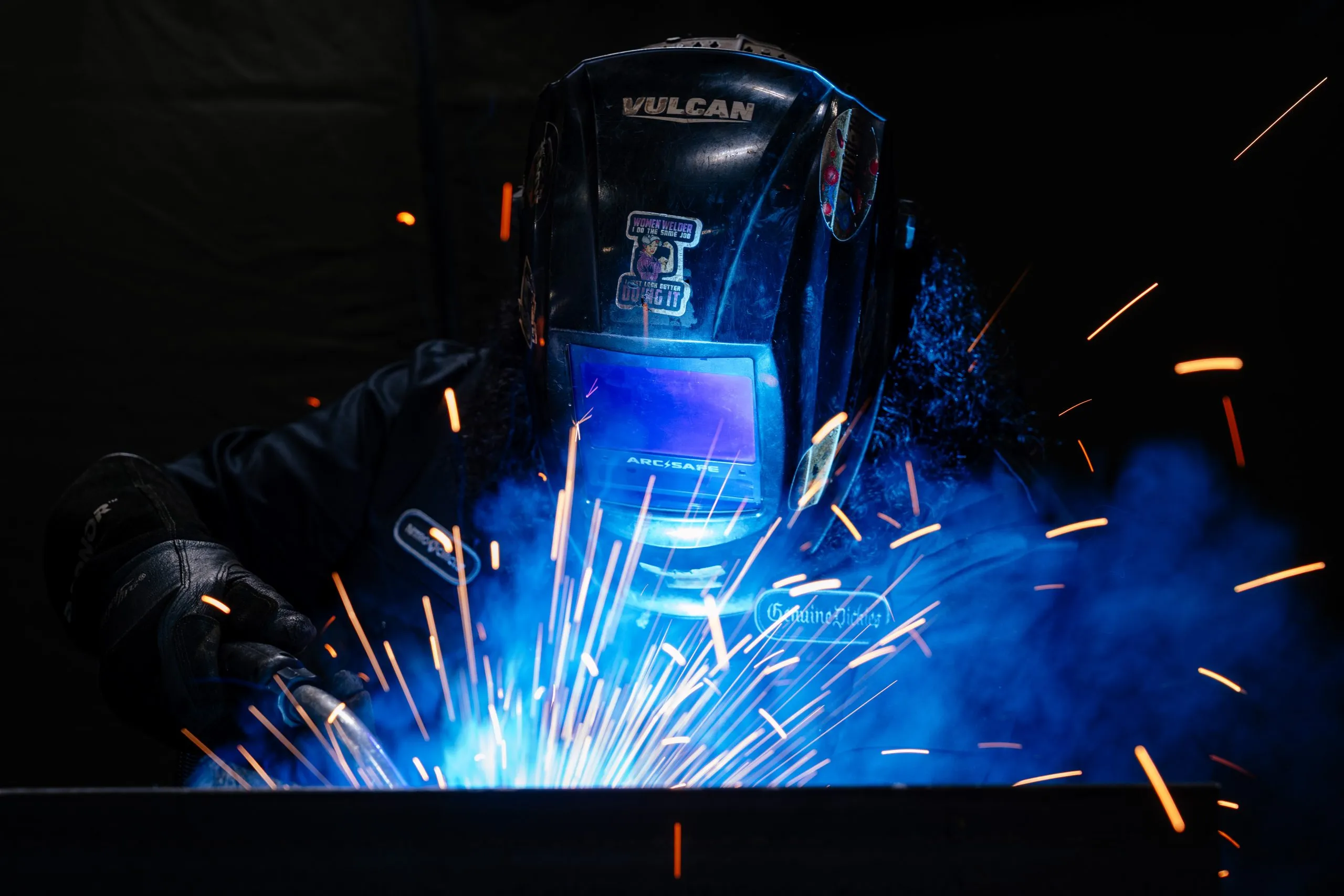
This story was written by Randiah Camille Green and created in partnership with the Ralph C. Wilson, Jr. Foundation. It is part of a year-long series focusing on programs and pathways to good paying jobs and careers in Detroit.
Teia Moore has held a wide variety of jobs, covering several job sectors. She’s been a school lunch lady and ran an adult foster care home, before she began working in manufacturing, which she said felt most aligned with her skills and interests. But she was devastated when, after trying to advance in the industry, she was denied a spot in a welding apprenticeship program – she said because she is a woman.
So, when a friend told her about Women Who Weld, she jumped at the opportunity, hoping being surrounded by other women would allow her to learn the skills she wanted, while being in a supportive environment. She was right. Moore completed an intensive training program with Women Who Weld in 2019, and is now working as a fabricator, able to execute entire projects, from blueprint to completion.
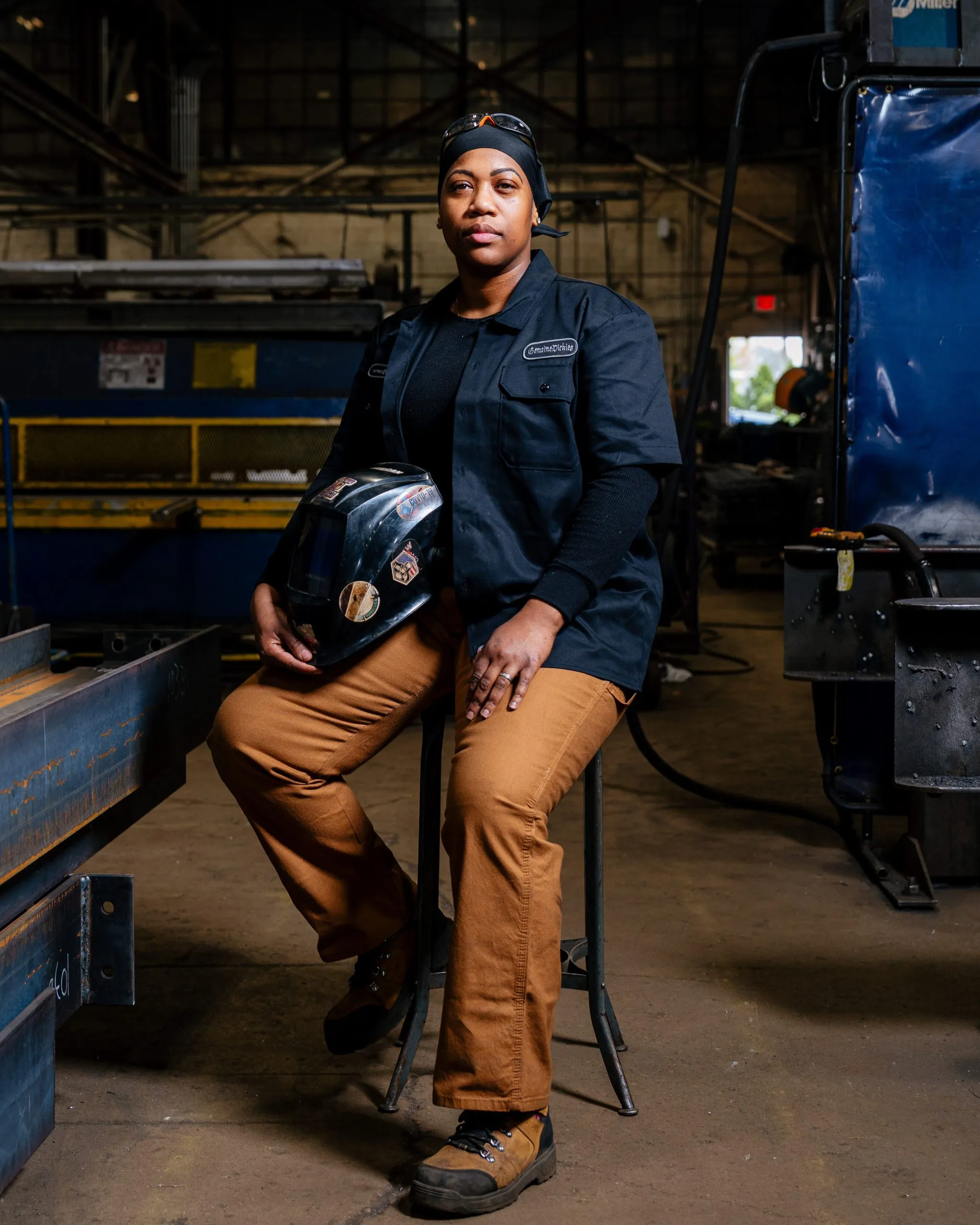
Women Who Weld offers a week-long intensive that teaches women the foundations of welding, and prepares them to enter the industry, all for $800. The organization also hosts a one-day introductory workshop for $125, for those who need a little more exposure before making the week-long commitment. These classes are partially subsidized, offering a steep discount from the estimated $3,500 that it costs to provide the week-long training. The Ralph C. Wilson, Jr. Foundation has supported these classes through its grantmaking since 2023.
“I was surrounded by women who were taking it as seriously as I did, because they’re used to being denied too,” Moore said. “They really teach more than just how to weld. They prepare you for the workforce, help you fill out applications, and really set you up for success… They show you what to do and what to say when you walk in the door, because, as a woman, you do have to work a little harder, and [potential employers] are looking at you a little funny.”
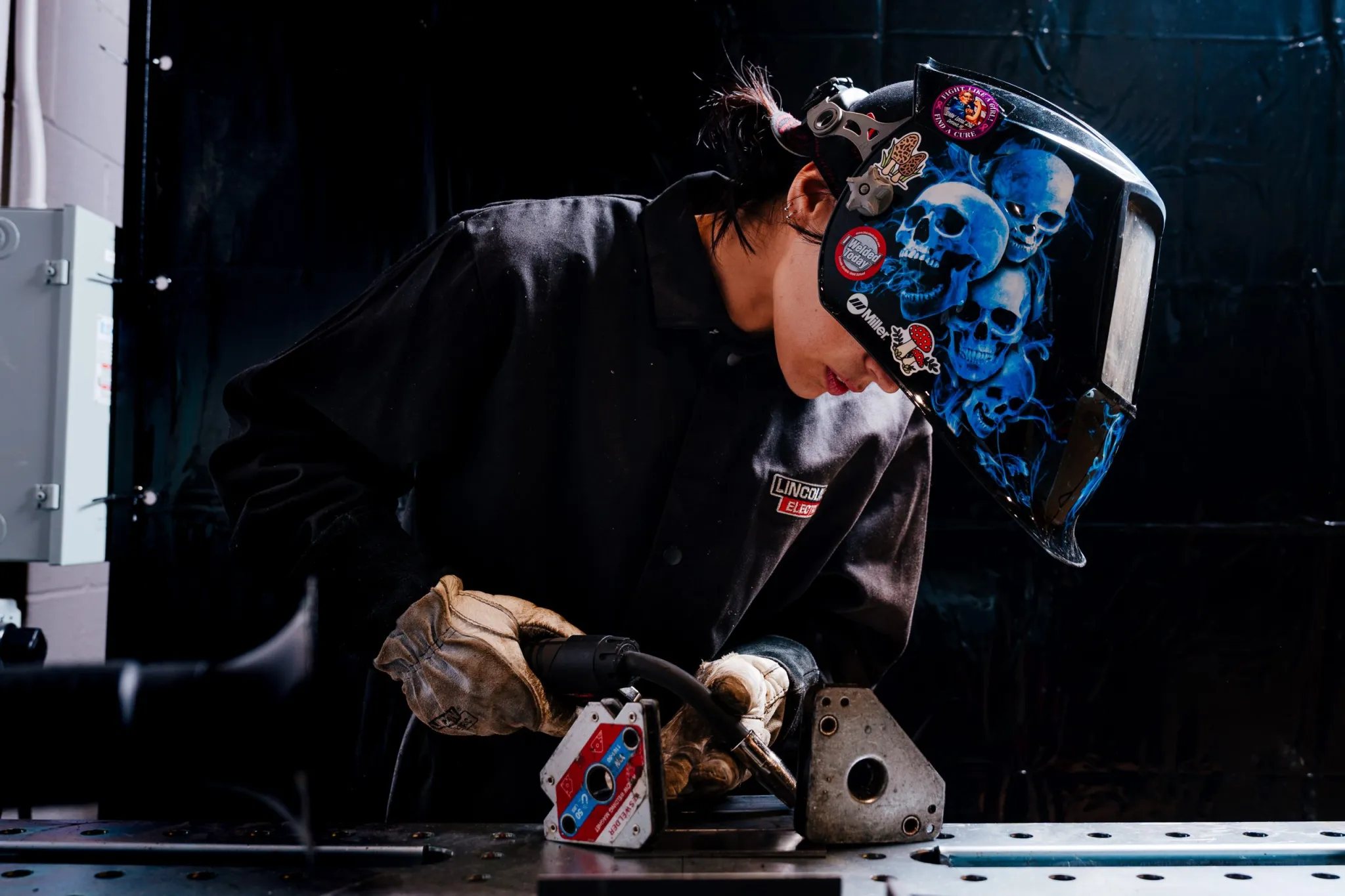
Moore has gone on to work in production welding, joined the Sheet Metal Workers union, and now specializes in producing metal handrails. She has built parts for ambulances and firetrucks, and also worked on the 26-foot Menorah, for the Menorah in the D celebration at Campus Martius. She said she feels “welding is a woman’s job [because] it requires patience and attention to detail,” adding that these handcrafted details show up in many items used on a daily basis.
“Welding is in everyday life. People don’t understand, most of the chairs you sit on, they have welds. Your tables have welds. It’s part of everything. And that lets you know that you’re always gonna have a job,” Moore said.
Samantha Farrugia established Women Who Weld in 2014. While she was studying at the University of Michigan for her master’s in city planning, she took a welding course. She had grown up watching her jeweler father set diamonds, and always had an interest in welding.
“I instantly loved it,” she said about the university welding class. “But I looked around and thought, ‘Why aren’t there more women in this fabrication lab?’ My master’s program was dominated by women, yet they weren’t in the fabrication lab, even though they had access to it.”
When she started the organization, Farrugia just wanted to teach welding so that other women would feel as powerful as she felt while doing it, but she later realized there was a huge demand in the industry. And when she’d go on interviews for city planning jobs, after completing her master’s program, potential employers saw Women Who Weld on her resume and convinced her that that’s what she should be doing instead.
“I thought it would just be a summer camp type program, but [potential employers] would tell me, ‘No, that’s your purpose,’” she remembers.
Women Who Weld has trained roughly 750 participants, many of whom have gone on to become production welders, sheet metal workers, fabricators, and iron workers. The organization is even a registered pre-apprenticeship for the Iron Workers Union.
Ali LaBorde is now an iron worker apprentice with the Iron Workers Union, Local 25, after completing Women Who Weld’s weeklong intensive in 2025. The skills she learned through Women Who Weld, along with the organization’s positive reputation, helped her land a four-year apprenticeship with the union.
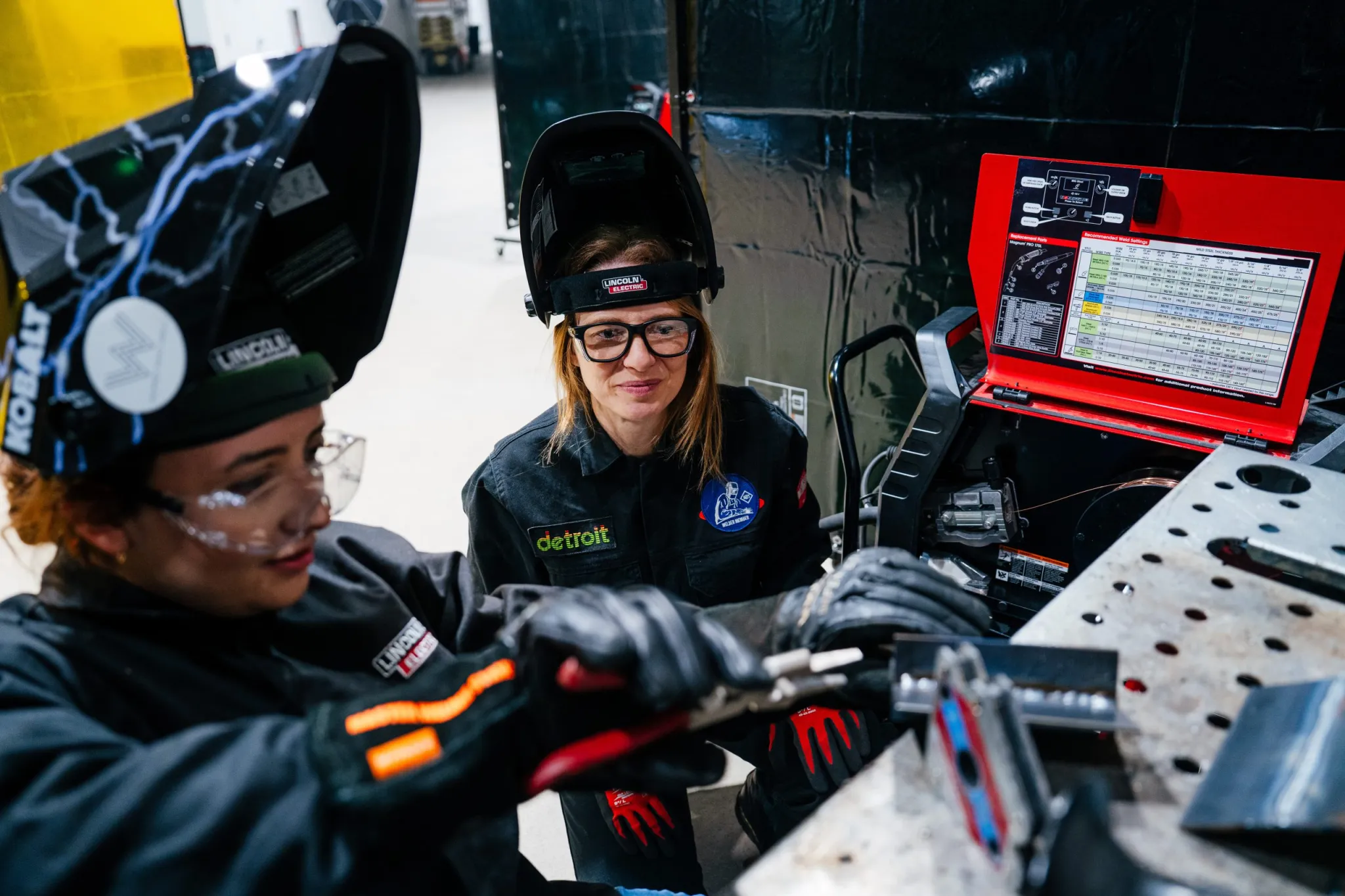
“Going through Women Who Weld was a huge confidence builder. … I may be going into this apprenticeship where I’m going to be over my head for four years, but at the very least, I know I can weld. I know I’m confident in a weld booth and I can hold my own,” LaBorde said. “And not only was it encouraging to see women in the field, but Samantha was actually the one who really encouraged the Iron Workers Union for me. She gave me the phone number for the apprenticeship coordinator… and they’re like, ‘Oh Women Who Weld, we had one of their participants before and they were great.’”
Having previously completed the one-day intro course, LaBorde participated in the subsidized weeklong course after learning she was about to get laid off from an office job. She’d started the job during the pandemic to help pay her bills, but it made her miserable. So, she took the opportunity to launch her career as an iron worker.
“Welding is intimidating. It’s hot, there’s sparks, it’s electricity. You look at it and you’re like, ‘Man, that’s cool but I don’t know if I can handle that,’” she said. “So the one-day course was a lot of like, just get in there and try it. That was a great introduction to get over that hump of it being scary. Then the weeklong course really pushed my limits. It really progressed into more complicated positions and welding techniques, and reading layouts.”
For LaBorde, the small class sizes and individual attention from instructors set Women Who Weld apart from other training.
“It’s a fantastically supportive environment,” she said. “For that weeklong course, there were eight participants and four instructors. … If you did a welding class at a community college, or even the welding I do through the training center with the ironworkers, you may have 40 people and two instructors. All of the instructors [at Women Who Weld] are very understanding that people are going to be scared going into something like this for the first time. They walk you through it, and if you need the baby steps, they’ll take you through the baby steps.”
Moore echoes LaBorde’s thoughts, adding that the best thing about Women Who Weld is the supportive network of women. Even though she has worked in shops that didn’t have a women’s bathroom, and said she has experienced harassment from male coworkers, she always has support from the organization’s founder and participants. “Once you enter Women Who Weld, you’re never alone again. You’re never without an opportunity, and you’re never without a friend. There have been women who’ve bounced through shops that I’m at, from Women Who Weld, and I tell them, ‘I got you,’” Moore said. “I call Sam my second mom. To this day, any opportunity she sees that she thinks is befitting for me, or will help me advance, she sends it my way. She is amazing. I walked through that whole program thinking I wasn’t good enough, and every day she told me, ‘You are more than enough.’”
Moore added, about the week-long intensive, “It’s one week that will change your life.”
Women Who Weld’s next single-day workshop is scheduled for October 24, with the week-long intensive being held October 26-30. Registration opened in early June. Detroiters who are low-income and who sign up for the mailing list will receive notice of a further subsidized week-long course, supported by the Berman Foundation, that is offered once a year. For more information see womenwhoweld.org/programs or email info@womenwhoweld.org to be put on the mailing list for upcoming classes.
To learn more about programs and pathways to good paying jobs and careers in Detroit, Highland Park, and Hamtramck, visit: https://outliermedia.org/tag/pathways-to-good-paying-jobs/
Atlantic Impact gives young people hands-on experience in skilled trades
Atlantic Impact gives young people hands-on experience in skilled trades
Apprenticeship students craft projects big and small as they work toward employment.
By Randiah Camille Green
July 6, 2026
This sponsored story was originally published by Outlier Media
This story was written by Randiah Camille Green and created in partnership with the Ralph C. Wilson, Jr. Foundation. It is part of a year-long series focusing on programs and pathways to good paying jobs and careers in Detroit.
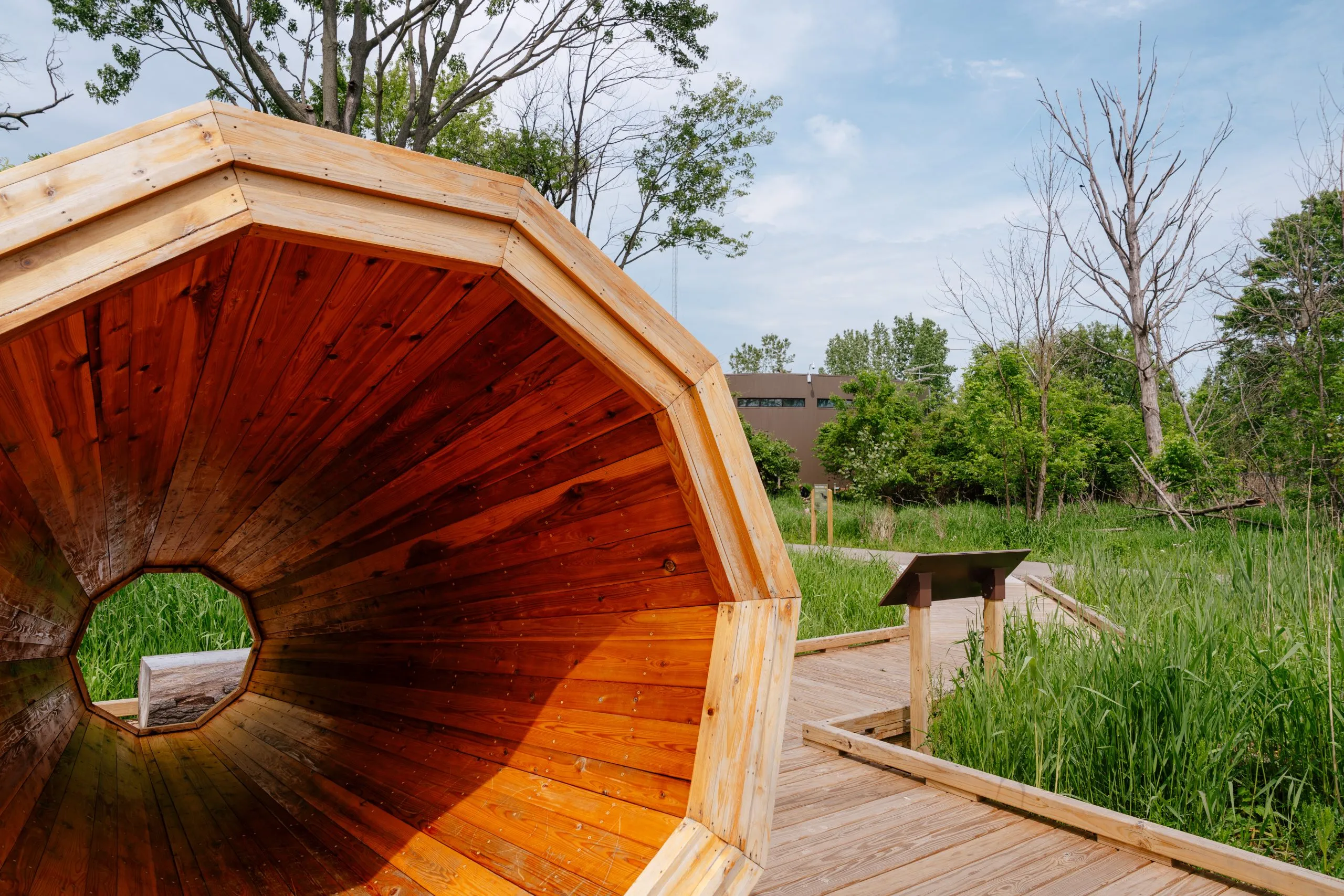
Outside the Belle Isle Nature Center sits a 10-foot-long wooden megaphone, welcoming visitors to climb inside to hear amplified sounds. Sitting in it feels like getting a warm hug from a tree, while listening to birds chirping and wind blowing through the surrounding ephemeral wetlands. This megaphone was built by Detroit high school students with the workforce development organization, Atlantic Impact, to amplify the sounds of nature and the students’ carpentry skills.
Twenty-year-old Ashley Sigala participated in building the nature megaphone two summers ago, when she was 18. She was looking for something productive to occupy herself with that summer and was interested in working with her hands. She didn’t know much about carpentry prior to her experience, but she and her fellow students learned how to measure, cut, sand, and assemble the wooden structure together, through Atlantic Impact.
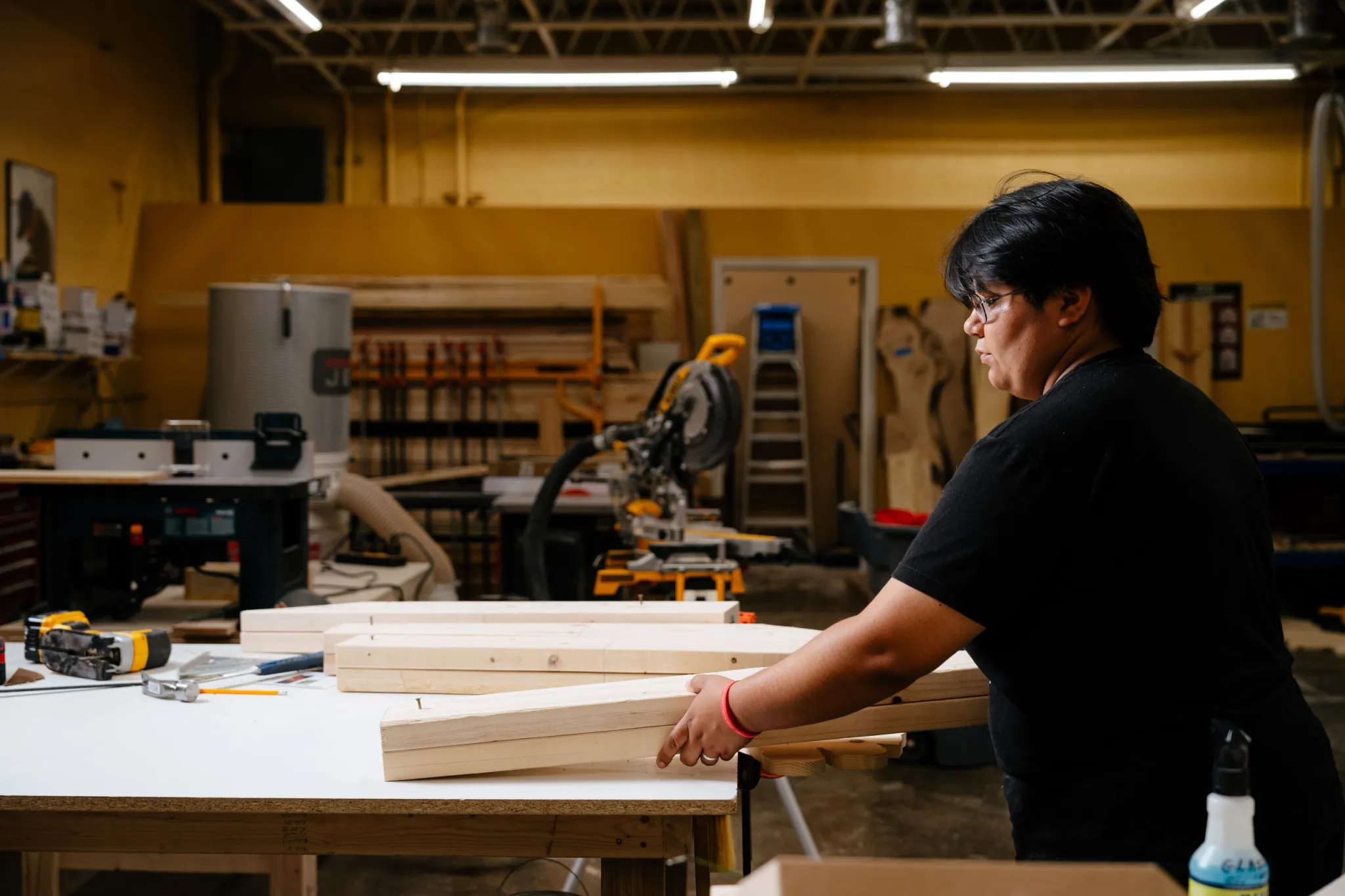
“I learned a lot about communication, because a lot of us didn’t know how to communicate very well at first,” she said of her experience. “I felt a burst of happiness and excitement, because something so little turned into something so big, going to a public place in Detroit that’s going to be there for a very long time.”
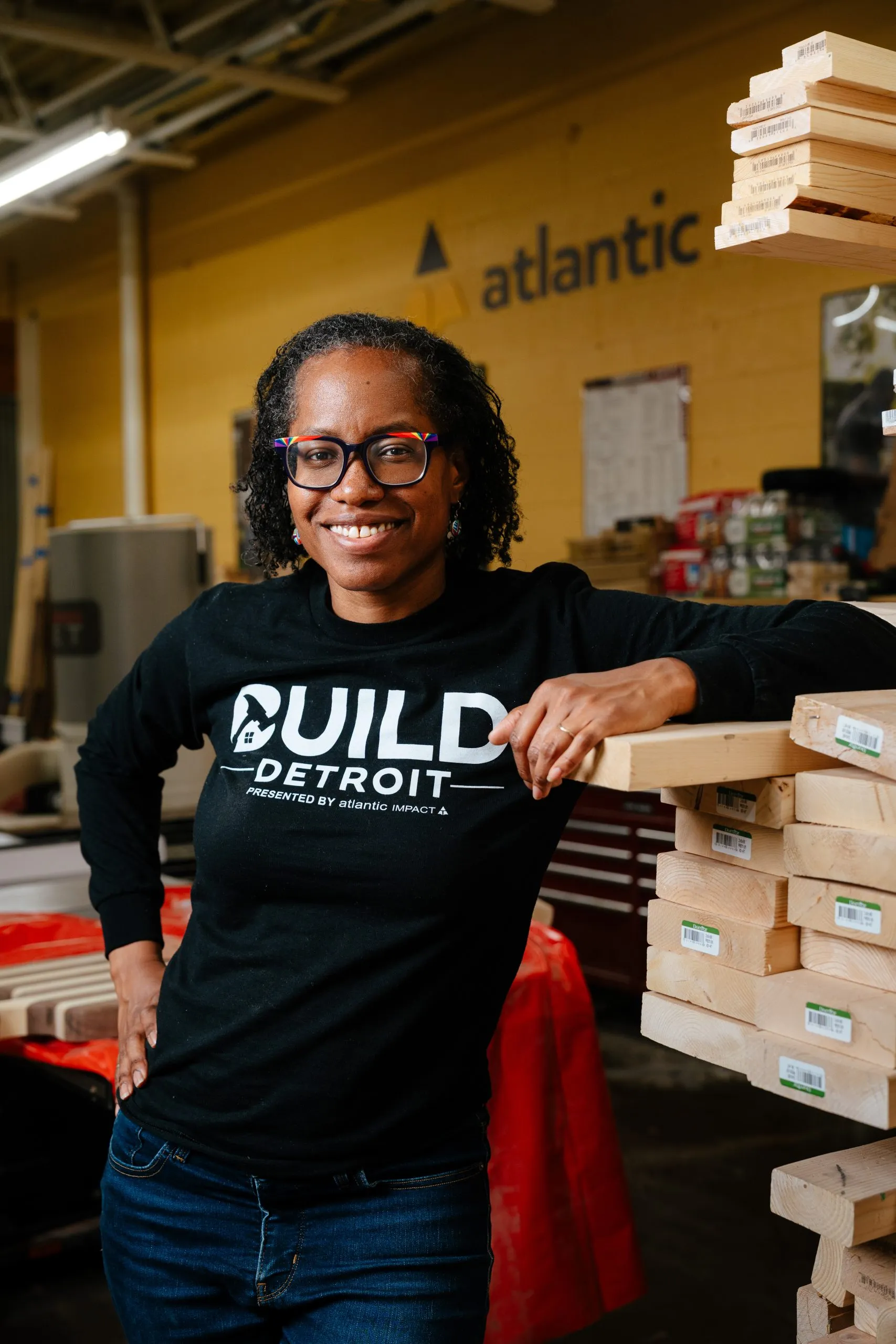
Atlantic Impact is a Detroit-based nonprofit that runs workforce development and college readiness programs for youth between the ages of 16 and 24. The megaphone was built as part of their summer apprenticeship readiness program, the Our Town Training School Pre-Apprenticeship Program, which teaches young people skilled trades like carpentry, masonry, welding, plumbing, and painting, with support from Grow Detroit’s Young Talent. The program runs eight to 10 weeks, and participants also learn job-readiness skills like resume building and interviewing tips. It is offered free of charge, in partnership with Detroit at Work, the City of Detroit’s workforce development agency and employment hub.
“Skilled trades tend to have higher wages, and it’s an aging population currently in skilled trades, so there’s a need for young people to come in and fill those jobs,” said Atlantic Impact Executive Director Anise Hayes. “Our goal is that 90% of students in the apprenticeship program will be placed with a job within six months. … They will come out of the program ready, with both the interpersonal skills, soft skills, and workforce readiness that will make employers want to work with them.”
She added about the megaphone, “We are really proud to have done that…that, to me, is a testament to what this training does because the students who built that megaphone got to see it installed, they got to see people use it, and then they got to be able to go out and tell employers that they built that. That’s the story of our work. We want our students to be able to say … that the things that they make have real world impact.”
While Atlantic Impact has a roughly 87% placement rate for students landing a job following the apprenticeship readiness program, they also operate a woodshop where students can earn $15 an hour while looking for work. After two summers with Atlantic Impact, Sigala continues to work in the woodshop, making products like customized cutting boards, benches, and chairs. She enjoys laser engraving on the wood, especially Red Wings’ and Tigers’ logos, and the baseball team’s Old English D. While she is currently studying finance at Wayne State University and sees woodworking as a hobby, her experiences with Atlantic Impact have given her newfound confidence.
“I feel like building the megaphone did help me grow a lot, maturity wise, because when you’re using tools, it’s not something you can just play around with,” she said. “And the fact that they trust me to use a big machine makes me feel appreciated and valued. I know it’s hard for people to find jobs right now and a lot of people are struggling. Well, with Atlantic Impact, I’m able to stay and get paid, have a job and still go to school.”
Atlantic Impact also supports Career and Technical Education (CTE) programs within the Detroit Public Schools Community District (DPSCD), which give hands-on training in skilled trades. They work with schools like the Randolph Career and Technical Center and Breithaupt Career and Technical Center, where students from across DPSCD can opt to attend for full or half days. For students who may not have access to these CTE programs, Atlantic Impact hosts similar activities at their own training space.
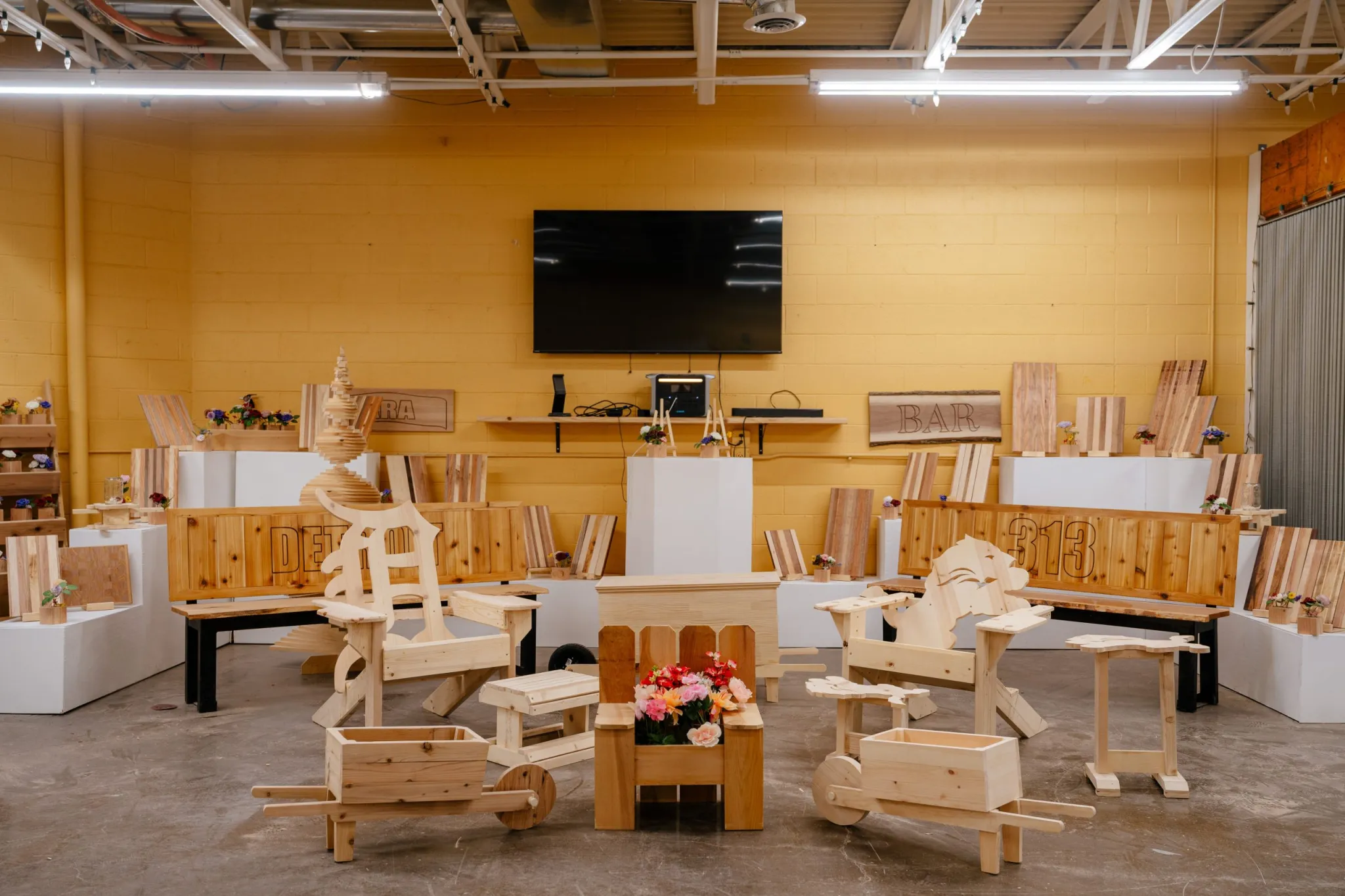
“They’re being exposed to the work, getting the chance to learn a little bit more about the trades,” Hayes said. “We kind of think of it as a continuum, where a student enters it, they get exposure, [then] they make a decision after they get the exposure whether this is something they want to do.”
Once a year, the organization hosts the Build Detroit Skilled Trades Challenge at Eastern Market, where CTE students from across metro Detroit compete in carpentry, welding, electrical, and masonry challenges. The students receive blueprints for a project and have three hours to build it. Afterward, they are judged by industry professionals and can receive awards.
“It’s really almost like an in-person audition that the students are giving, showing off their skills to employers and to unions across the region,” Hayes said.
Overall, Atlantic Impact’s goal is to help young people understand the value of potential careers in skilled trades and provide them with access to opportunities to enter the field.
“We want our students to understand that they’re not just building stuff, or they’re not just in a CTE program, or doing apprenticeship readiness to build something that has no value,” Hayes said. “We want them to understand … that the work they are going to do has real significance in the world that they live in. When you walk into a building, when you walk into a school, someone built that. When you drive down the road, someone built that.”
For more information on Atlantic Impact, visit atlanticimpact.org/ and for details on programs, see atlanticimpact.org/experience/ or instagram.com/atlanticimpact/. Applications for the summer apprenticeship readiness program opened in the spring and the program begins in July.
To learn more about programs and pathways to good paying jobs and careers in Detroit, Highland Park, and Hamtramck, visit: https://outliermedia.org/tag/pathways-to-good-paying-jobs/
Rural Insights for Philanthropy – Rural Downtowns as Community Hubs
Rural Downtowns as Community Hubs
Rural Insights for Philanthropy
If you want to do economic development in rural spaces, you have to have a more open approach and see where the opportunities are to move the ball a little farther down the field … There may not be an economic development nonprofit nearby… Find out who’s doing the work, and support them.
– Seth Wochensky, Springville Center for the Arts
By: Katie Brisson, Senior Director of Special Initiatives
June 2026
Through this series, Senior Director of Special Initiatives Katie Brisson shares stories and insights from rural communities across Southeast Michigan and Western New York. Each post highlights lessons from local leaders that can help shape more responsive and effective philanthropy.
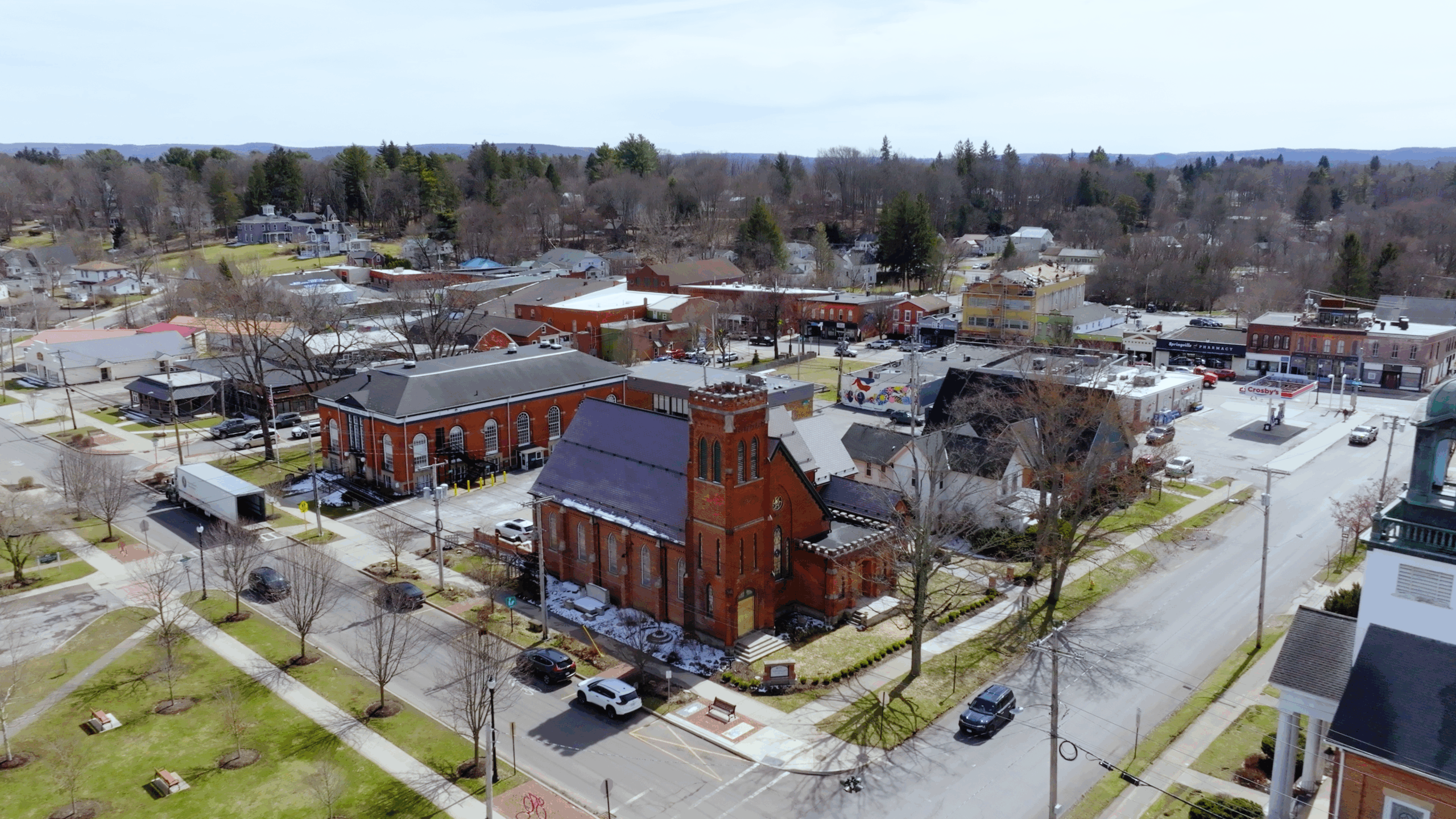
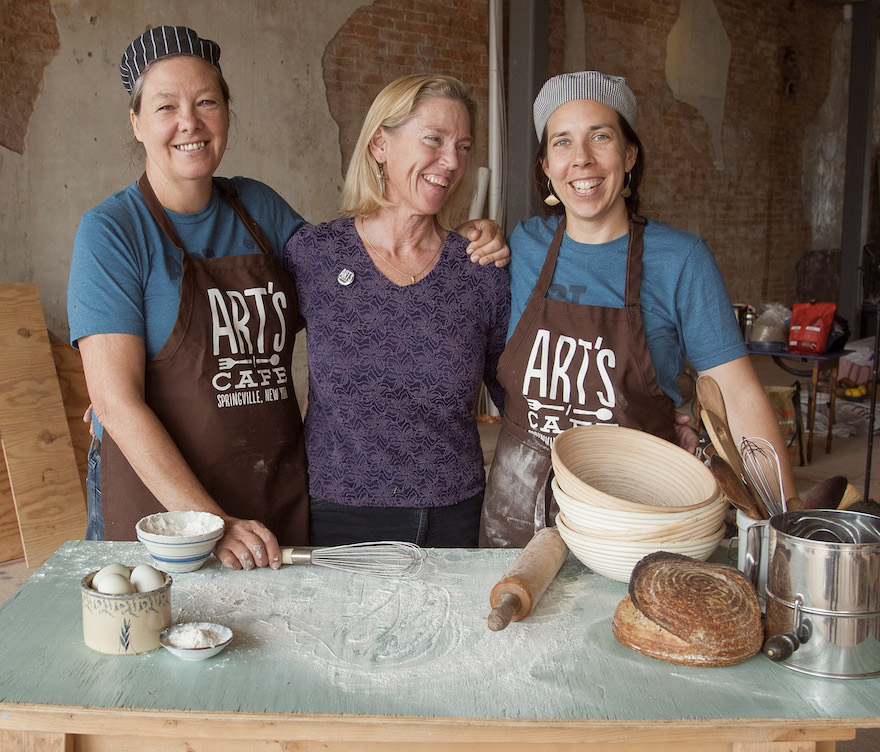
In January, the Foundation awarded a grant of $100,000 for upgrades to a commercial kitchen for use by local food entrepreneurs. The grant was not made to a traditional economic development organization, but to Springville Center for the Arts (SCA), a nonprofit that serves as fiscal sponsor for Art’s Café, LLC, where the kitchen is housed. Home to a population of 4,300, Springville, NY has many assets and draws residents from a wider area to its activities.
The story of Springville Center for the Arts (SCA), and the vision of its leader, provide important reminders on the value of community engagement as a key ingredient in successful downtown revitalization efforts, particularly in rural communities.
The main space for the arts organization is an 1869 former church converted into a theater, gallery and workshop space. But, over time, SCA has taken on a direct role in community revitalization, rehabbing buildings and working with other nonprofit and municipal partners on community initiatives.
We want the people that are going to be involved in our projects to have an ownership stake. We can’t look just within our four walls.
– Seth Wochensky, Springville Center for the Arts
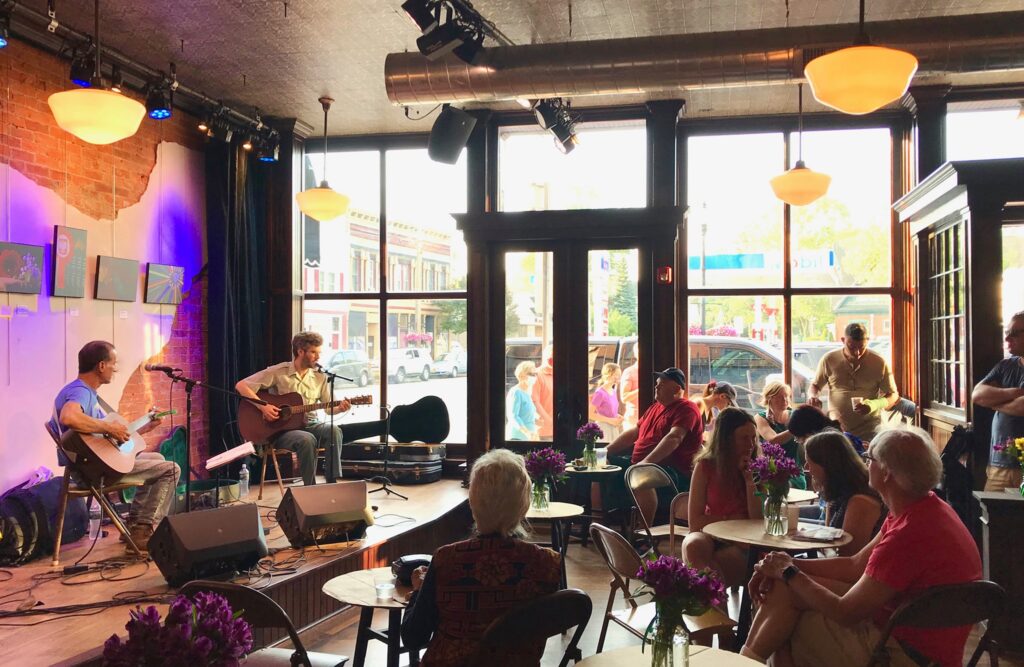
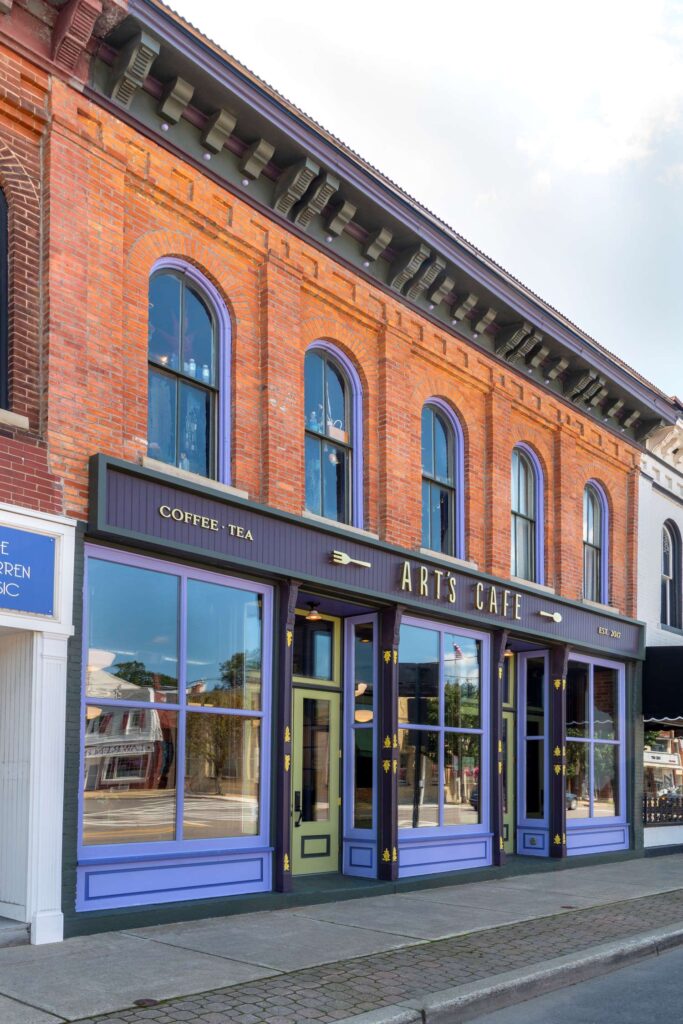
Art’s Café had been a collapsed building on Main Street, just down the block from SCA’s main space. Through a combination of government grants and community dollars, the café was rebuilt into spaces for performances, art workshops, artist residences and a public green roof, centered around a bakery-café. SCA helped fund the space through a cooperative ownership model that brought together the nonprofit, worker-owners and community members who could invest in the project. This structure is designed to ensure that the operation remains focused on:
- enlivening the community,
- workers having a rewarding sense of ownership, and
- residents having a way to invest in their own community.
Art’s Café now has robust annual sales, and has had a large effect along the Main Street, bringing 1,200 visitors weekly to a corner that has been vacant for a decade.
This past year, a group of community-investors, along with SCA, acquired the neighboring building to Art’s Café. This new project will be an expansion of the café operations at each level including housing, seating, a marketplace and a commissary kitchen. The renovations will follow a similar funding model to the café with a mixture of government and community financing. To support local food entrepreneurs with educational programs, the basement level will be converted into a full kitchen with direct access from the street as well as elevator access connected to the café. A grant from the Foundation is helping to provide equipment for the commercial kitchen.
Ultimately, SCA’s efforts aim to boost the quality of life for local residents, while also helping to grow the local economy.
Intensified Approach to Rural Downtown Investment
As a Foundation with limited staff, we know we will not always have the bandwidth to identify all the SCA’s of the world. And so, one of the approaches we are trying is to identify additional intermediaries – even on a county level – that have that knowledge of the rural spaces and leaders we are looking for, as connected to our priority areas.
Building on our experience with Seth and SCA, we recently connected with Main Street Oakland County (MSOC), one of 47 coordinating programs designated by Main Street America. Launched in 2000, MSOC is the first and only county-wide Main Street coordinating program in the U.S. MSOC currently serves 30 Main Street districts within Oakland County, Michigan, and is housed within the County’s Economic Development department.
Eleven of the Oakland Main Street communities are considered rural; places like Ortonville and the Village of Holly can often get forgotten about when larger economic development strategies are being developed.
Recognizing rural downtowns as a key type of rural community hub, our Foundation recently approved an investment in MSOC to oversee a regranting program to the 11 rural Main Street partners in Oakland County. The regrant program will provide $20,000 to each of the 11 communities for projects that address one or more of the following: capacity building needs, small business support, and bricks and mortar project implementation.
A Continued Journey
The Aspen Institute’s Community Strategies Group has spent 40 years seeking to strengthen economic development in rural regions and Native nations across the United States. Their Thrive Rural Framework reminds us that “Businesses that are owned locally are the most likely to make decisions that take into account and benefit multiple “bottom lines” in the community – and are most likely to reinvest in the community because they have a stake in its overall prosperity.”
Taking that to heart, and building on key reminders from Seth and others, we know that trusting – and investing in – visions built by engaged community members remains our greatest opportunity for impact.
Katie Brisson serves as Senior Director of Special Initiatives at the Ralph C. Wilson, Jr. Foundation. In this role, she contributes to the strategic insight and leadership to the foundation’s grantmaking initiatives while advancing special projects that strengthen impact across portfolios.
Katie brings more than two decades of experience in philanthropy, having spent 24 years at the Community Foundation for Southeast Michigan, including 11 years as Vice President of Program. During her tenure, she led efforts to shape grantmaking strategy during a period of significant growth and played a key role in launching collaborative initiatives such as the Detroit Journalism Engagement Fund, the Michigan Opioid Partnership, and Project Play: Southeast Michigan.
D’Artillery provides safe haven, jobs, and community for women seeking economic independence
D’Artillery provides safe haven, jobs, and community for women seeking economic independence
The woman-only space serves the unique needs of immigrants and others in Hamtramck.
By Randiah Camille Green
June 3, 2026
This sponsored story was originally published by Outlier Media
This story was written by Randiah Camille Green and created in partnership with the Ralph C. Wilson, Jr. Foundation. It is part of a year-long series focusing on programs and pathways to good paying jobs and careers in Detroit.
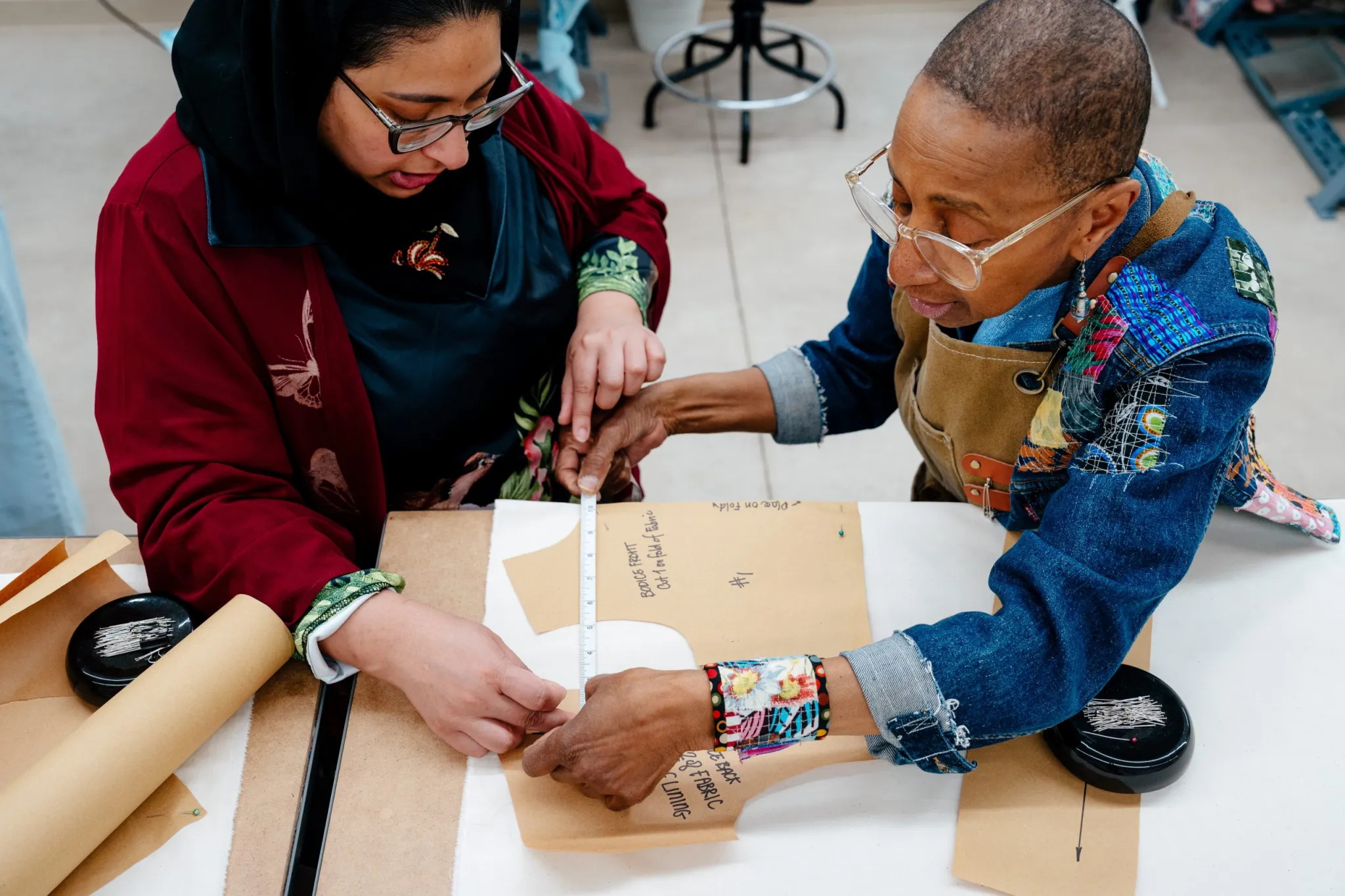
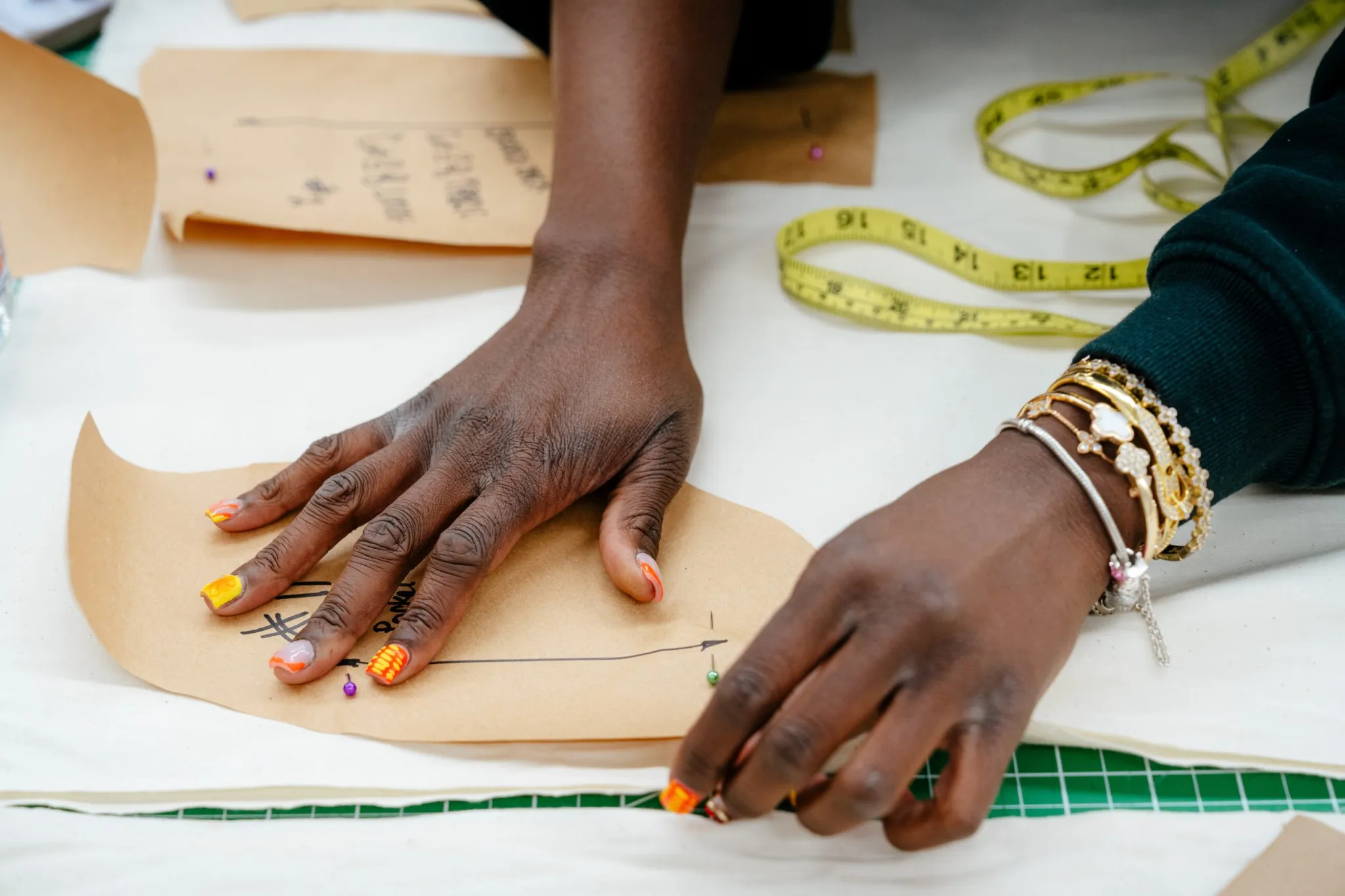
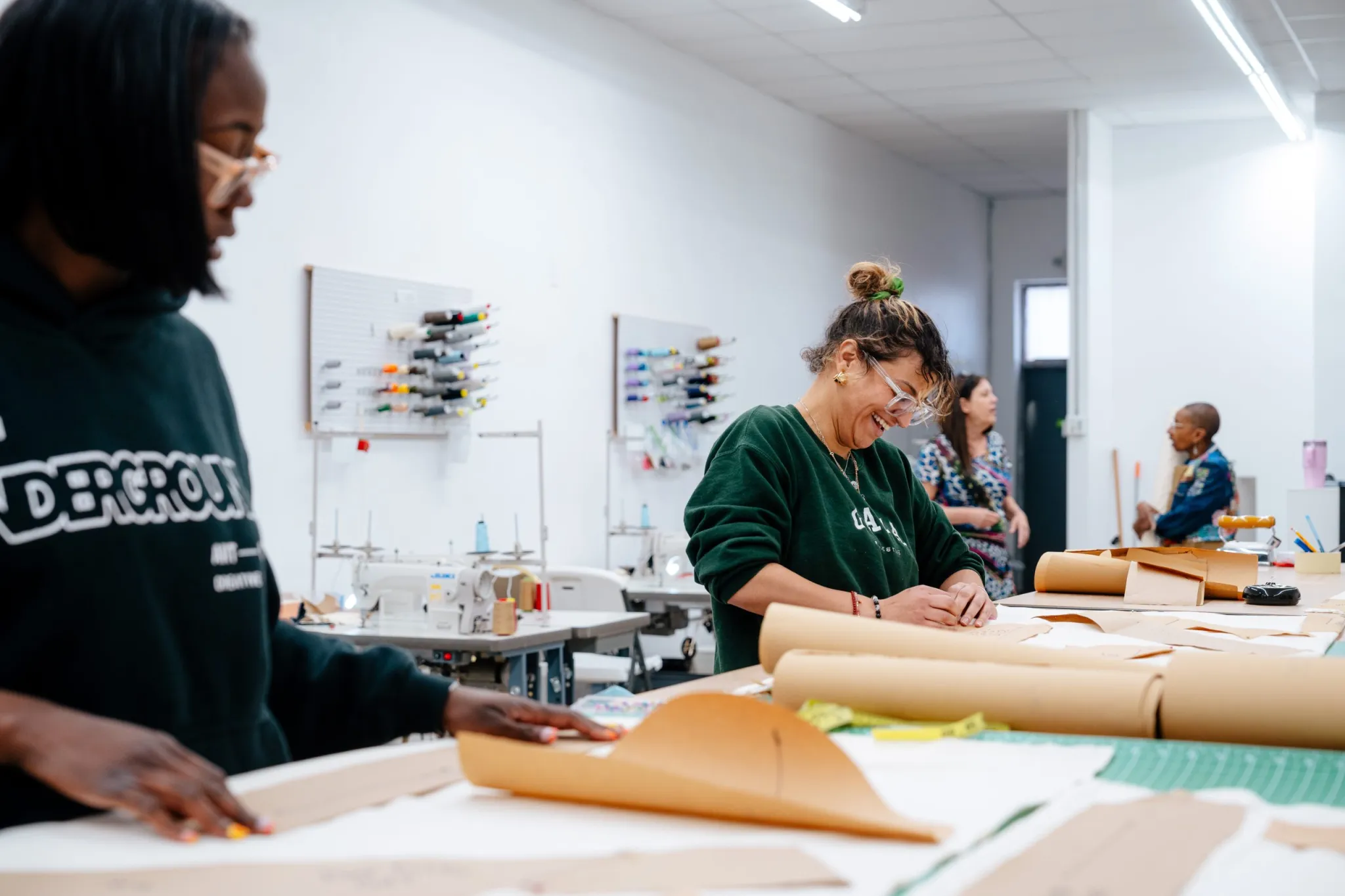
Pattern pieces lie sprawled across tables that hold rows of sewing machines. A group of women gathers around and listens intently to their instructor, some wearing hijabs and others dressed in hoodies and jeans. The multicultural group sporadically breaks out in laughter, sharing smiles and giggles, before going back to their patterns.
It’s a gloomy Tuesday afternoon in Hamtramck, but D’Artillery is brimming with life. D’Artillery provides sewing and small batch manufacturing training to primarily immigrant and refugee women. Those in the shop today are participating in a 12-week “earn and learn” sewing course where they are trained in the production, alteration, and upcycling of clothing. Their teacher is master tailor Denise Reed, who has more than 40 years of experience.
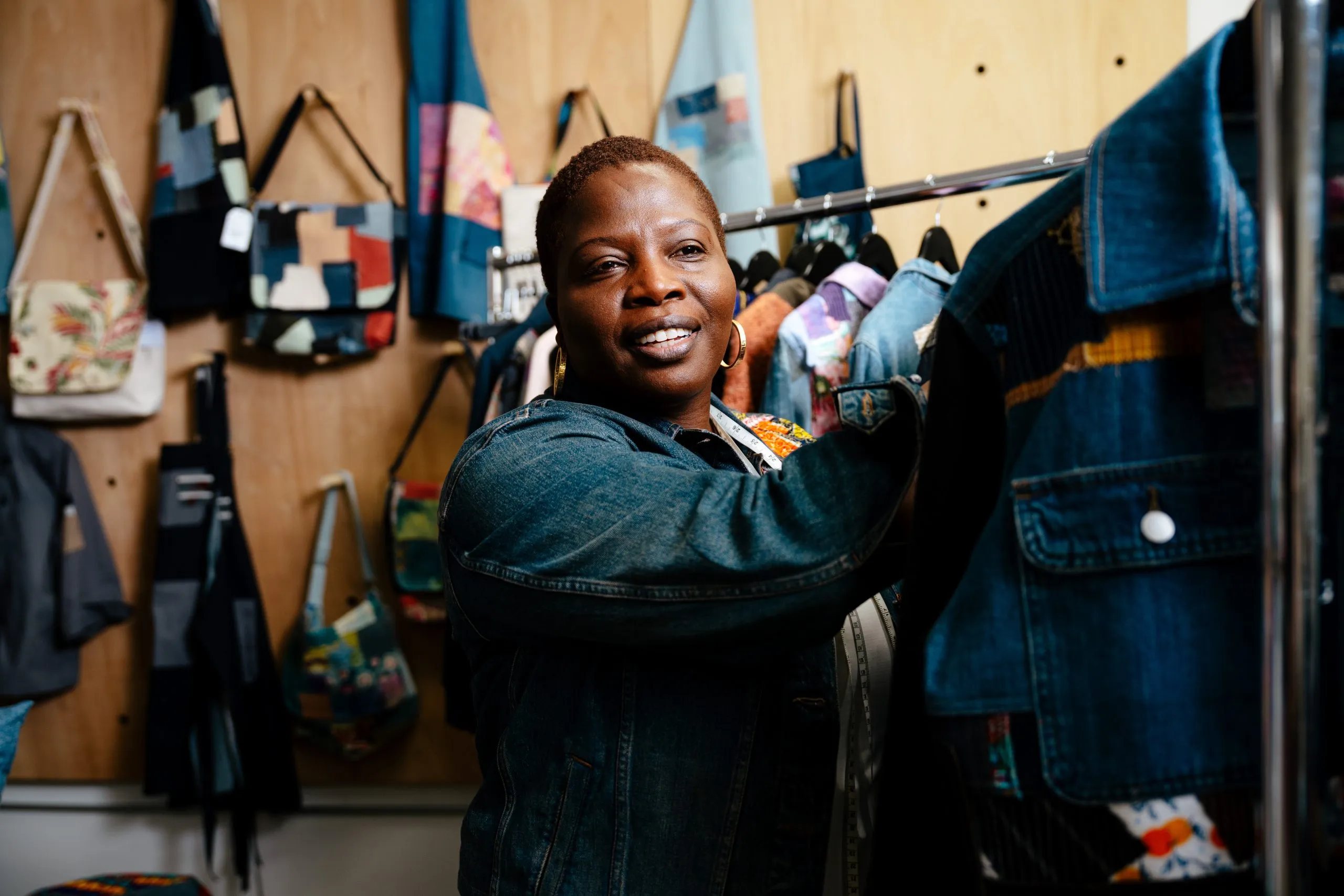
A Haitian American woman wearing a patchwork skirt comes out from the back of the shop. Her name is Gracieuse Xavier, the founder of D’Artillery, but everyone calls her Gracie. She feels like both a mother and a friend to the ladies working at their cutting tables.
“I work in the intersection of creativity, community, and commerce, and that is D’Artillery,” she says. “We’re supporting a community of women to leverage their creative talent to build economic opportunity and prosperity for themselves and their family, and we do that through textile art, sewing, and small batch manufacturing.”
The earn and learn course is offered on a sliding scale, with support from the Ralph C. Wilson, Jr. Foundation, and is geared toward women who want to have their own business. In addition to that, D’Artillery offers beginning and advanced sewing classes for women who are interested in sewing as a hobby, and English as a second language classes to serve the multicultural neighborhood. They also have a store where some of their program graduates sell bespoke handmade items, like aprons, pillowcases, and bags. One participant in the earn and learn course went on to run her own business making prom dresses.
“We work with predominantly immigrant communities, and a lot of these people need skills that they can do from home,” Xavier says. She was the director of corporate engagement and strategy at Global Detroit, and a Detroit Revitalization fellow, working in the Brightmoor neighborhood, before starting D’Artillery. “Some of the programs that already existed didn’t necessarily fit the schedule of the communities we work with.”
D’Artillery is a woman-centered space. This is intentional, to make immigrant women feel more comfortable, along with providing a culturally appropriate space to meet the needs of the largely Muslim community.
“The women can take breaks when they need to do their prayers and we have prayer mats here for them,” Xavier says. “We are here from 9 to 2, and we’ll stay later if production is necessary, but that’s in consideration that [some of] the women have children and they have to leave to go pick up their children. We have some women, especially our Yemeni ladies, who might wear the niqab, and they are able to take it off when they want to because they know this is a safe space for them.”
Huda Saeed first came to D’Artillery to take English classes three years ago, then found herself even more excited by the shop’s sewing machines.
The 48-year old Yemeni woman was a stay-at-home mom who had done alterations for her family members, but she hadn’t had the chance to learn more formal sewing skills. D’Artillery’s woman-only programming provided a comfortable setting for her to learn.
“I like the creative process of putting things together,” she said. Saeed completed the 12-week program and works part time in D’Artillery’s bespoke goods shop where she makes $15 an hour, primarily making aprons, bags, and pillow covers. “I like the encouraging environment that Gracie provides, and they have great teachers. They are so kind and supportive.”
She adds, “I encourage women in this community, especially those busy with their home life, to find a way to come here because it’s a supportive environment for a creative outlet.”
For women who may already have foundational sewing skills and want to take their entrepreneurship to the next level, D’Artillery hosts a 12-week business training course, in partnership with ProsperUs Detroit, called Woventures. Twice a year, participants are coached through building samples of their garments, setting their prices, and touring production factories, as they work on their designs.
This year, D’Artillery is piloting an apprenticeship with internationally acclaimed native Detroit designer Tracy Reese of Hope For Flowers, where the women will learn to work on high-end garments.
While D’Artillery’s focus is on immigrant women, their program is open to women of all backgrounds.
“Being an immigrant woman myself, creativity is not always encouraged,” Xavier says. “We’re encouraged to become doctors, lawyers, or engineers. We’re homemakers or caretakers. We need to know that there’s an opportunity that we can do both.”
Corina Fadel is taking the 12-week earn and learn class. She previously worked with Detroit Denim, which produced custom denim wear, and learned industrial sewing at the Industrial Sewing & Innovation Center (ISAIC). She jumped at the chance to learn from a master tailor at D’Artillery and expand her skillset. She hopes to start her own business mending clothing, upcycling denim, and collage quilting, layering and fusing fabric pieces to form art.
“This is a place where you can grow your skills and practice while your confidence grows,” she says of D’Artillery, pausing for instructions on what to do next with her pattern pieces. “It’s a space that’s nurturing and encouraging of your desire and dreams.”
The next beginning and intermediate sewing courses at D’Artillery start in June, with classes held for five weeks. D’Artillery’s next 12-week earn and learn cohort begins in September, with applications opening in mid-July. For more information, visit dartillery.org/.
To learn more about programs and pathways to good paying jobs and careers in Detroit, Highland Park, and Hamtramck, visit: https://outliermedia.org/tag/pathways-to-good-paying-jobs/
Traffic changes, bike track for Belle Isle
Rural Insights for Philanthropy – Becoming Part of the Tapestry

becoming part of the tapestry
Rural Insights for Philanthropy
It’s a partnership between us and every single person that walks through the door.
– Robert Batt, Executive Director, Cornell Cooperative Extension (Orleans County, NY)
By: Katie Brisson, Senior Director of Special Initiatives
May 2026
Through this series, Senior Director of Special Initiatives Katie Brisson shares stories and insights from rural communities across Southeast Michigan and Western New York. Each post highlights lessons from local leaders that can help shape more responsive and effective philanthropy.
As we spend more time visiting the rural communities we serve, our foundation staff has come to the realization that – it’s not only what we see, but how we see – that leads to successful investments. There is a need to learn about the legacies we are building on, and people we are building with. Local leaders are best poised to provide that guidance.
As we think about how to honor Mr. Wilson’s legacy, we know the most lasting impact will be the investments that honor the donors who have come before us, and those who will come after us. It has become clear that we need to weave our investments closely with the goals of residents, especially in communities where close-knit networks and shared stewardship make community vision deeply personal.
Local Leaders as Guides
One amazing local leader we have learned a lot from is Robert Batt. Robert started coming to 4-H programs at the Orleans County fairgrounds when he was 8 years old. He is now the Executive Director of Cornell Cooperative Extension (CCE) – Orleans, which oversees the 4-H programs, the county fairgrounds, and much more.
Last September, the Foundation awarded a grant to CCE-Orleans County of $250,000 for upgrades to the Trolley Building on the fairgrounds campus. A key building utilized by area nonprofits, government partners and residents – for everything from archery to baby showers to entrepreneur training – made it an obvious focal point for the grant.
Thanks to Robert’s guidance, the organization is also utilizing a portion of the grant to launch a new community collaboration program aimed at strengthening connections between nonprofit organizations from across the county. Robert helped us make the investment better. He helped us to understand the dynamics of the county’s civic infrastructure post-pandemic and how facilitated convenings could make a real difference at this time in spurring thoughtful partnerships.
Having the support to help us nonprofits talk about collaboration, focus on it, and create time and space that sometimes we all struggle to have … has been inspirational.
The Giving USA data continues to remind us that foundation dollars are just a portion of charitable giving in this country. There is danger when organized philanthropy works on visions and goals isolated from the communities it serves. Knowing philanthropic giving in rural communities is limited, we are particularly mindful of this.
No gift is worthwhile if it doesn’t connect to the aspirations of the people it is working to serve.
The ones who are learners become the teachers… A mom of some of the younger 4-H kids was once in the program. Now she’s a leader who’s out teaching her kids and other kids all about livestock and animal husbandry. She dedicates hours and hours and hours of time. … Eileen has probably contributed a small University’s worth of education to the people in our county.
Keeping Strong Ties
Having ties to home communities is critical for some nonprofits to survive, and this is made difficult when people move away. We need to work to maintain those ties to inspire those still present.
Turns out the “Trolley Building” was named after Harold Trolley who, in 1965, was president of the County Fair committee, right after they bought the grounds. He was instrumental in building the first few buildings. To this day, the Trolley family has made contributions to help with maintenance even though many of them have moved away. Similarly, Robert told us about a former Master Gardener who moved south to retire, but still encourages his grandchildren to give back.
While we always appreciate philanthropists and grants, people here are part of what we do, and they contribute just as much … And as long as we keep doing a good job, we keep people passionate.
Being Part of the Solution
To maximize the impact of philanthropic investments, it’s critical to learn on what you are building before you build. The overall tapestry of our rural communities has already been woven. As our foundation adds our threads to the whole, we will become a part of it. If we do it right, the community won’t know a different type of thread has been added. It just fits with the rest of it.
Katie Brisson serves as Senior Director of Special Initiatives at the Ralph C. Wilson, Jr. Foundation. In this role, she contributes to the strategic insight and leadership to the foundation’s grantmaking initiatives while advancing special projects that strengthen impact across portfolios.
Katie brings more than two decades of experience in philanthropy, having spent 24 years at the Community Foundation for Southeast Michigan, including 11 years as Vice President of Program. During her tenure, she led efforts to shape grantmaking strategy during a period of significant growth and played a key role in launching collaborative initiatives such as the Detroit Journalism Engagement Fund, the Michigan Opioid Partnership, and Project Play: Southeast Michigan.