

Rural Downtowns as Community Hubs
Rural Insights for Philanthropy
If you want to do economic development in rural spaces, you have to have a more open approach and see where the opportunities are to move the ball a little farther down the field … There may not be an economic development nonprofit nearby… Find out who’s doing the work, and support them.
– Seth Wochensky, Springville Center for the Arts
By: Katie Brisson, Senior Director of Special Initiatives
June 2026
Through this series, Senior Director of Special Initiatives Katie Brisson shares stories and insights from rural communities across Southeast Michigan and Western New York. Each post highlights lessons from local leaders that can help shape more responsive and effective philanthropy.
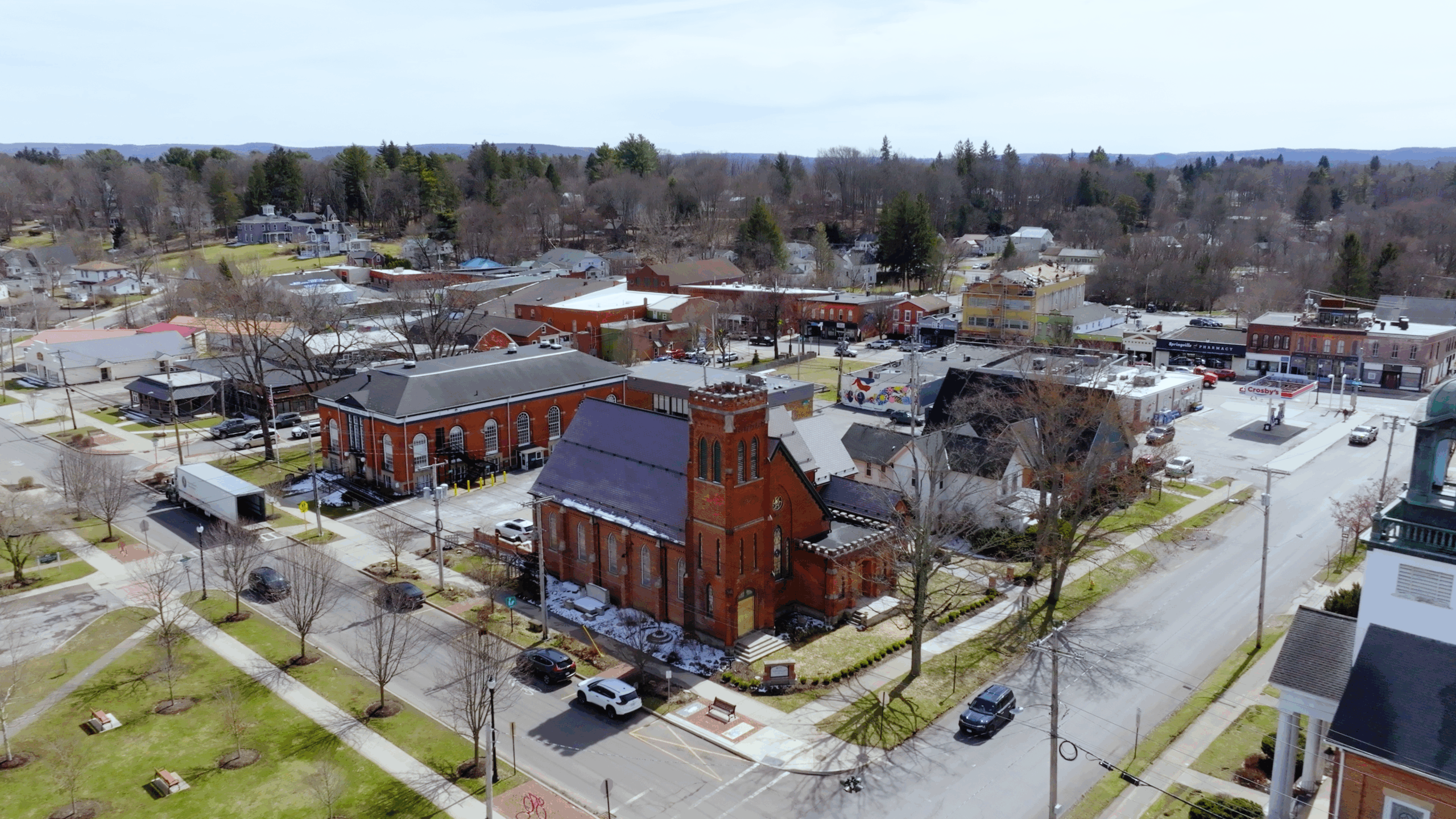
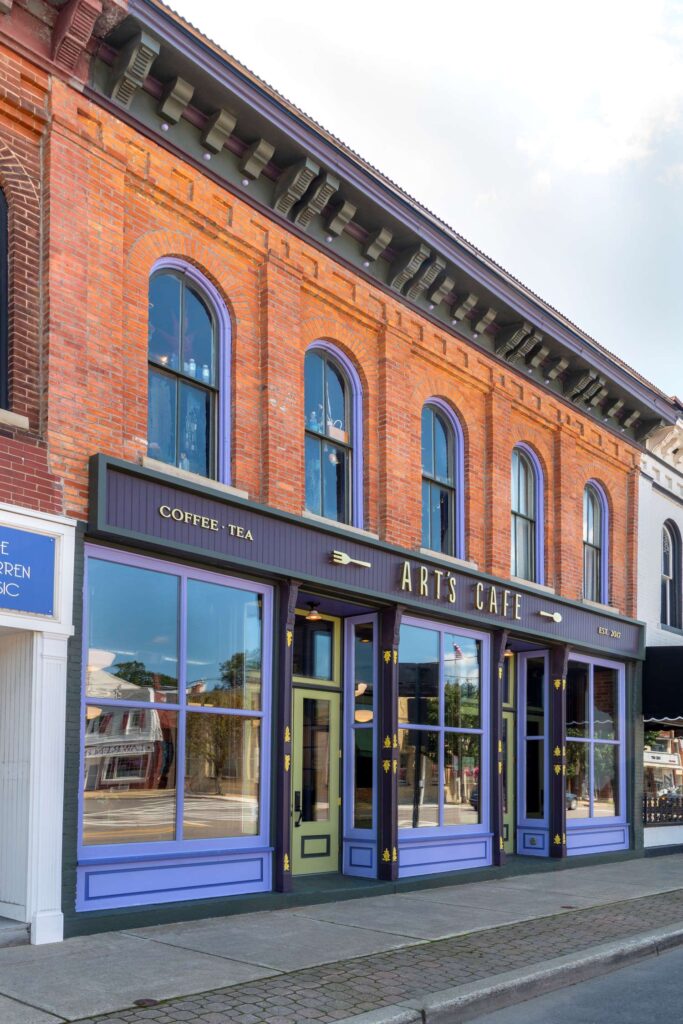
In January, the Foundation awarded a grant of $100,000 for upgrades to a commercial kitchen for use by local food entrepreneurs. The grant was not made to a traditional economic development organization, but to Springville Center for the Arts (SCA), a nonprofit that serves as fiscal sponsor for Art’s Café, LLC, where the kitchen is housed. Home to a population of 4,300, Springville, NY has many assets and draws residents from a wider area to its activities.
The story of Springville Center for the Arts (SCA), and the vision of its leader, provide important reminders on the value of community engagement as a key ingredient in successful downtown revitalization efforts, particularly in rural communities.
The main space for the arts organization is an 1869 former church converted into a theater, gallery and workshop space. But, over time, SCA has taken on a direct role in community revitalization, rehabbing buildings and working with other nonprofit and municipal partners on community initiatives.
We want the people that are going to be involved in our projects to have an ownership stake. We can’t look just within our four walls.
– Seth Wochensky, Springville Center for the Arts
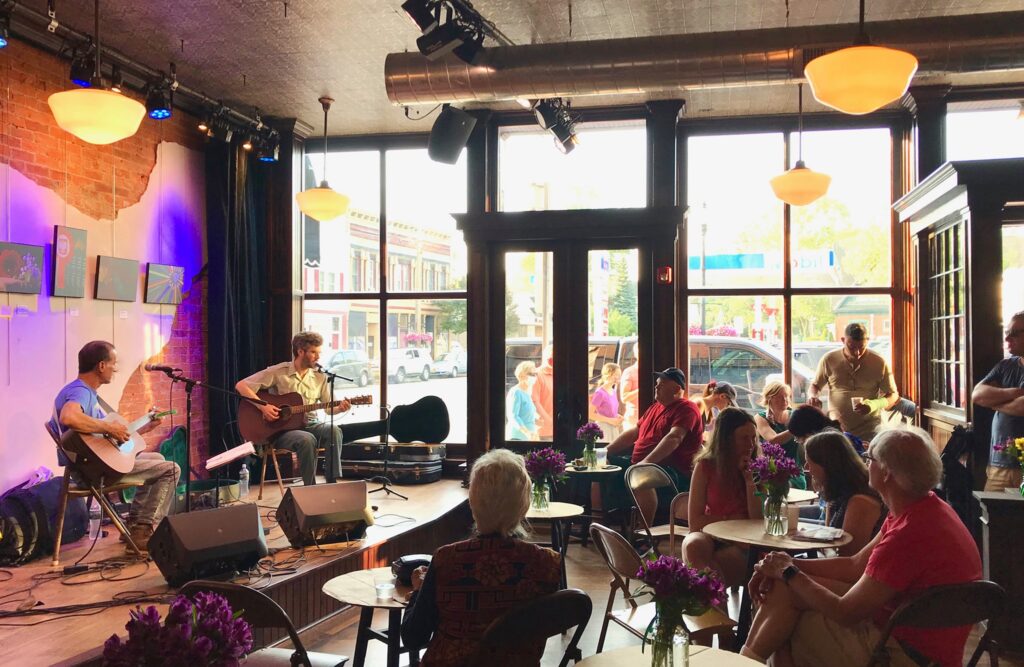
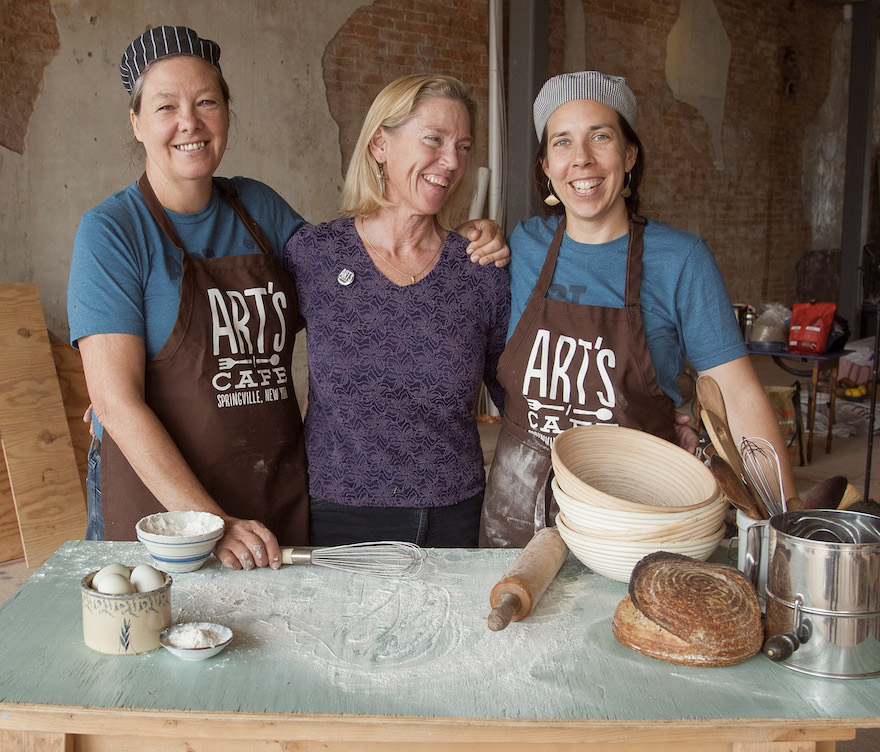
Art’s Café had been a collapsed building on Main Street, just down the block from SCA’s main space. Through a combination of government grants and community dollars, the café was rebuilt into spaces for performances, art workshops, artist residences and a public green roof, centered around a bakery-café. SCA helped fund the space through a cooperative ownership model that brought together the nonprofit, worker-owners and community members who could invest in the project. This structure is designed to ensure that the operation remains focused on:
- enlivening the community,
- workers having a rewarding sense of ownership, and
- residents having a way to invest in their own community.
Art’s Café now has robust annual sales, and has had a large effect along the Main Street, bringing 1,200 visitors weekly to a corner that has been vacant for a decade.
This past year, a group of community-investors, along with SCA, acquired the neighboring building to Art’s Café. This new project will be an expansion of the café operations at each level including housing, seating, a marketplace and a commissary kitchen. The renovations will follow a similar funding model to the café with a mixture of government and community financing. To support local food entrepreneurs with educational programs, the basement level will be converted into a full kitchen with direct access from the street as well as elevator access connected to the café. A grant from the Foundation is helping to provide equipment for the commercial kitchen.
Ultimately, SCA’s efforts aim to boost the quality of life for local residents, while also helping to grow the local economy.
Intensified Approach to Rural Downtown Investment
As a Foundation with limited staff, we know we will not always have the bandwidth to identify all the SCA’s of the world. And so, one of the approaches we are trying is to identify additional intermediaries – even on a county level – that have that knowledge of the rural spaces and leaders we are looking for, as connected to our priority areas.
Building on our experience with Seth and SCA, we recently connected with Main Street Oakland County (MSOC), one of 47 coordinating programs designated by Main Street America. Launched in 2000, MSOC is the first and only county-wide Main Street coordinating program in the U.S. MSOC currently serves 30 Main Street districts within Oakland County, Michigan, and is housed within the County’s Economic Development department.
Eleven of the Oakland Main Street communities are considered rural; places like Ortonville and the Village of Holly can often get forgotten about when larger economic development strategies are being developed.
Recognizing rural downtowns as a key type of rural community hub, our Foundation recently approved an investment in MSOC to oversee a regranting program to the 11 rural Main Street partners in Oakland County. The regrant program will provide $20,000 to each of the 11 communities for projects that address one or more of the following: capacity building needs, small business support, and bricks and mortar project implementation.
A Continued Journey
The Aspen Institute’s Community Strategies Group has spent 40 years seeking to strengthen economic development in rural regions and Native nations across the United States. Their Thrive Rural Framework reminds us that “Businesses that are owned locally are the most likely to make decisions that take into account and benefit multiple “bottom lines” in the community – and are most likely to reinvest in the community because they have a stake in its overall prosperity.”
Taking that to heart, and building on key reminders from Seth and others, we know that trusting – and investing in – visions built by engaged community members remains our greatest opportunity for impact.

Katie Brisson serves as Senior Director of Special Initiatives at the Ralph C. Wilson, Jr. Foundation. In this role, she contributes to the strategic insight and leadership to the foundation’s grantmaking initiatives while advancing special projects that strengthen impact across portfolios.
Katie brings more than two decades of experience in philanthropy, having spent 24 years at the Community Foundation for Southeast Michigan, including 11 years as Vice President of Program. During her tenure, she led efforts to shape grantmaking strategy during a period of significant growth and played a key role in launching collaborative initiatives such as the Detroit Journalism Engagement Fund, the Michigan Opioid Partnership, and Project Play: Southeast Michigan.