

IN KIND CONTRIBUTIONS: WHAT RURAL PROJECT BUDGETS DON’T SHOW
Rural Insights for Philanthropy
You’ve got to get involved… Go to your planning commission meeting. Go to your city council meeting… Get out of the bleachers and get on the playing field.
– Steve Weaver, Memphis (MI) Lions Club
By: Katie Brisson, Senior Director of Special Initiatives
August 2026
Through this series, Senior Director of Special Initiatives Katie Brisson shares stories and insights from rural communities across Southeast Michigan and Western New York. Each post highlights lessons from local leaders that can help shape more responsive and effective philanthropy.
As the Ralph C. Wilson, Jr. Foundation has been investing more intentionally in rural communities, one dynamic has quickly risen to the surface: local volunteers provide an incredible range of in-kind support to community projects and institutions.
We have seen, for example, architects providing design work pro bono, lawyers providing legal advice at no cost, and whole groups of residents organizing weekly maintenance of local parks. Accounting for these contributions reveals the true scale of the projects they support, and the full value communities are investing in them.
Some rural leaders question whether calculating and documenting these contributions is worth the effort, particularly when funders rarely ask about them. Others believe naming their value could help communities demonstrate local commitment, attract new resources and meet matching requirements. The Memphis Lions Club illustrates both the significance of these contributions and the difficulty of fully capturing them in a conventional project budget. The significant value of these contributions should not be underestimated.
The strength of the rural community is the strength of the people that are in it… You bring together a bunch of people with different interests, and all of them community service-minded, and it is amazing what they can do.
– Nancy Thompson, Memphis (MI) Lions Club
In the spring of 2025, staff from the Community Foundation for St. Clair County introduced us to leaders from the Memphis Lions Club and Youth Center. Memphis (MI) is located on a county line, with a portion of the city located in Macomb County and a portion in St. Clair County. It has a population of 1,000 people.
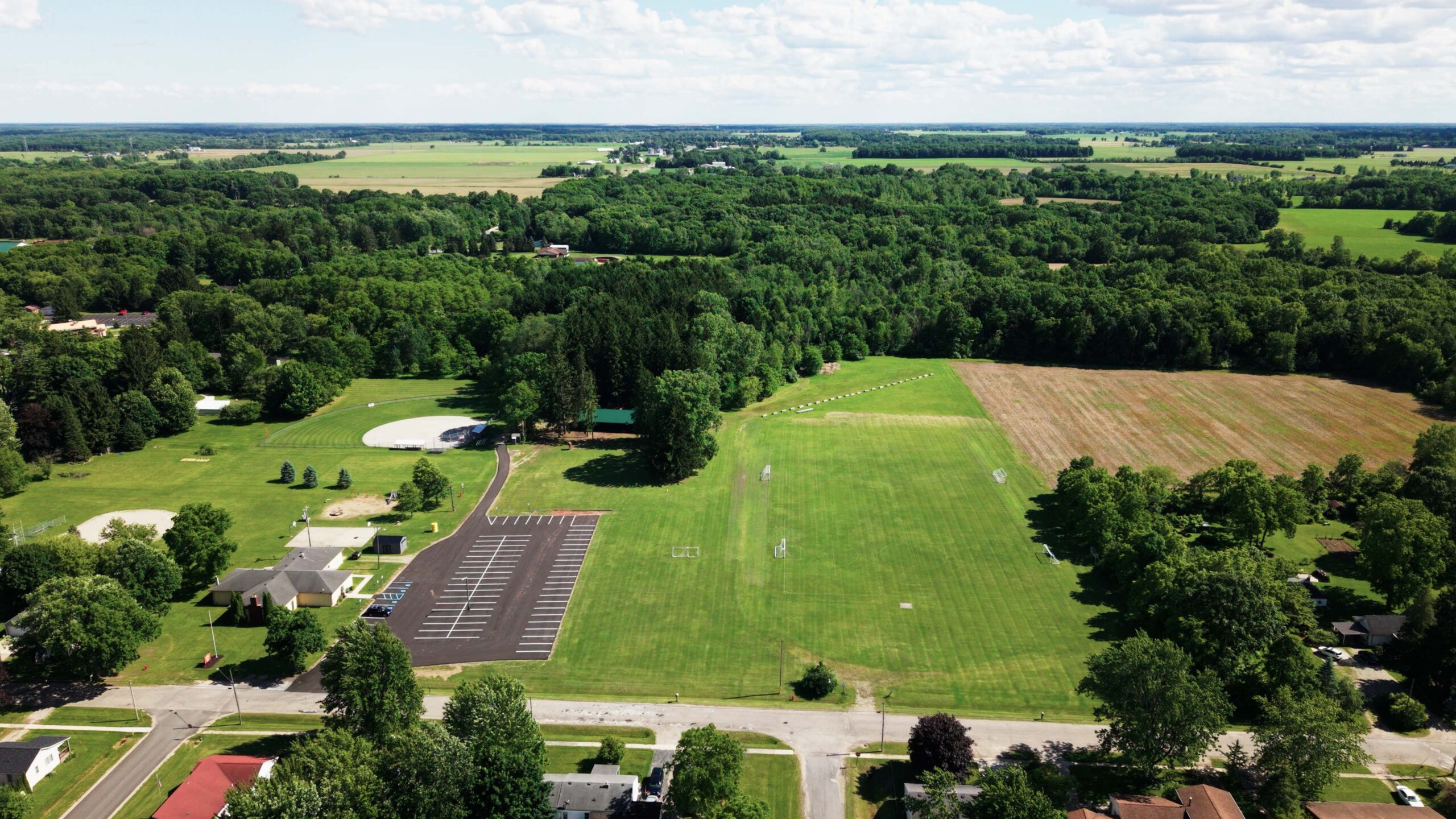
The Memphis Lions Club owns a 17-acre property in the heart of Memphis. The building is home to a wide range of community events, from holiday celebrations for seniors to city council meetings to local weddings. The outside property is home to the local soccer league, a “book trail” through the woods maintained by the local library, a pavilion, where summer concerts and events occur, and a playground.
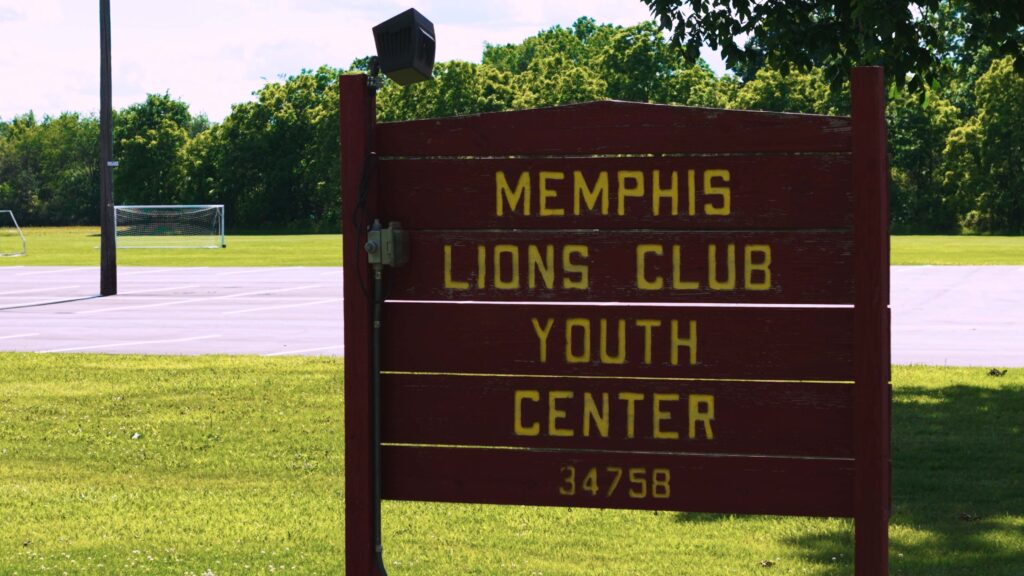
The Memphis Community Schools building is also conveniently located just down the street and serves over 700 students from the surrounding area, many of whom participate in programming at the Lions Club property. The activities at the Memphis Lions Club attract a wide circle of people in nearby rural communities.
The Foundation recently provided a grant for significant capital upgrades to the Memphis Lions Club building and grounds. These improvements included paving the parking lot to improve access for people using strollers or wheelchairs, constructing an outdoor stage to reduce equipment rental costs for events, and completing other upgrades such as painting and replacing doors.
In this case, the Foundation’s grant supported improvements that required specialized expertise, materials and funding beyond what volunteers could reasonably provide. Although the organization operates with a modest budget, local leaders and residents contribute substantial in-kind support by maintaining the property and sustaining its programs. Recognizing the full value of those contributions helped us see how targeted grant dollars could go further and strengthen an already well-supported community asset.
It’s graduation parties, it’s funeral dinners. It’s where sports teams come. It truly is the definition of “community hub” in a rural community, because you don’t have options. You don’t have 10 different halls where you could host something. … Community hubs are important to be accessible, to be open, and to truly operate in a way that allows everyone to be welcome to do and gather and enjoy one another’s company in a space that feels comfortable.
– Jackie Hanton, Community Foundation for St. Clair County
We are heartened by rural leaders like those involved with the Memphis Lions Club, whose work is helping us see our investments differently. Their example demonstrates how targeted capital can complement the time, leadership and care residents already contribute. It has also encouraged us to think more flexibly about how needs within our priority areas show up in rural communities, and how Foundation funding can strengthen and advance the work local leaders and volunteers have sustained for years.

Katie Brisson serves as Senior Director of Special Initiatives at the Ralph C. Wilson, Jr. Foundation. In this role, she contributes to the strategic insight and leadership to the foundation’s grantmaking initiatives while advancing special projects that strengthen impact across portfolios.
Katie brings more than two decades of experience in philanthropy, having spent 24 years at the Community Foundation for Southeast Michigan, including 11 years as Vice President of Program. During her tenure, she led efforts to shape grantmaking strategy during a period of significant growth and played a key role in launching collaborative initiatives such as the Detroit Journalism Engagement Fund, the Michigan Opioid Partnership, and Project Play: Southeast Michigan.