

Open4’ to Support Resilience of Small Businesses and Nonprofits Across WNY
A new initiative to connect small businesses and nonprofit organizations in the Buffalo and Rochester regions with support from the public, private and philanthropic sectors to improve their long-term strength and resilience was announced today.
Download Press ReleaseRalph C. Wilson, Jr. Foundation Commits $1.5 Million to Support Front Line Caregivers in Acute Care Hospitals in Western New York and Southeast Michigan
Over the past four weeks, the Ralph C. Wilson, Jr. Foundation (RCWJRF) has allocated more than $6 million toward COVID-19 response effort.
Download Press ReleaseA Message to our Grantees About COVID‑19
Dear friends and partners,
In accordance with guidance and recommendations from the Centers for Disease Control and the State of Michigan to mitigate community spread of COVID-19, the Ralph C. Wilson, Jr. Foundation has closed its physical office in Detroit effective today.
As the coronavirus situation unfolds we will continue to review potential reopening on an ongoing basis, which would happen, at earliest on April 6th. In addition, the Foundation is imposing a ban on travel and all in-person meetings through April 20th, at which point we will reassess.
During this time our staff will remain active and committed to our work and communities, and will be accessible via email, phone and remote meeting technologies. We will also continue to process grant payments through our usual means, and organizations may continue to apply for grants through our Fluxx system. Grantee updates related to report deadlines and other related adjustments can continue to be shared via the Fluxx system for active grants.
We want to assure each of our grantees that we understand your work will undoubtedly be affected during this time, including, but certainly not limited to, the cancelation of events/convenings and other necessary program delivery changes and adjustments that will need to occur. And, many of you are working through very real concerns about how this situation will affect your day-to-day operations. Our staff recognizes these concerns and will have flexibility in working with each of you around potential impacts.
Your service and commitment to our communities is critical, especially during these times of uncertainty and crisis. We are grateful for each of you and know that our communities will rise to the challenges that will undoubtedly face us in the coming weeks and months.
We will continue to monitor this evolving situation and, of course, work with our partners on how we can best serve our communities.
Sincerely,
David Egner
President and CEO
Ralph C. Wilson, Jr. Foundation
Invest Detroit announces $10M grant from Ralph C. Wilson Jr. Foundation to support City of Detroit’s Strategic Neighborhood Fund
Invest Detroit announced today a $10 million grant from The Ralph C. Wilson Jr. Foundation. The investment will support the Strategic Neighborhood Fund (SNF) over the next five years to help spur strong commercial corridors and catalytic parks in 10 neighborhoods across the city.
Download Press ReleaseRalph C. Wilson, Jr. Foundation Bringing National Campaign to Southeast Michigan and Western New York to Help Keep Kids From Quitting Sports
Following the distribution of more than $57 million in grants to bolster youth sports access and participation in Southeast Michigan and Western New York since 2015, the Ralph C. Wilson, Jr. Foundation has announced the launch of a localized national public service campaign, #DontRetireKid.
Download Press ReleaseWhat We Discovered in “Startup Nation”
Lavea Brachman, Vice President of Programs, Ralph C. Wilson, Jr. Foundation
This May, the Ralph C. Wilson, Jr. Foundation sponsored a trip to explore social entrepreneurship in Israel. Dubbed the “Startup Nation,” Israel’s entrepreneurism has become part of its DNA, sprung from several unique factors, and leading to an unprecedented number of successful high-tech and other businesses.
To enrich the Foundation’s thinking around its grantmaking in Entrepreneurship & Economic Development, we gathered a delegation of partners and grantees from our two regions to join us in exploring how Israelis are leveraging this entrepreneurial spirit and tying it to tangible business creation and skills training activities — connecting underserved and marginalized populations with economic opportunity. We visited with Israeli leaders working to help those living at the economic margins of Israeli society – including Arab-Israelis, Ethiopian Jewish immigrants, ultra-Orthodox religious Jewish community members, and women – start businesses and gain employable skills that allow them to live productive and self-supporting lives.
Our visit focused on innovative organizations creating on-ramps for populations who lack equal access to education, jobs and economic opportunity. The trip proved immensely rewarding as the group learned about unexpected similarities between Israel and our two regions — providing thought-provoking takeaways and allowing for rich learning exchanges.
Only 71 years old as a nation, Israel has diversified dramatically in the last several decades, transforming from a homogenous population composed primarily of European Jews to a country of Jewish immigrants from countries across the Middle East and Ethiopia, as well as a rising Arab population and other smaller religious sects. These culturally and religiously diverse groups have led to marginalized populations and increasing challenges of poverty and isolation, mirroring many of the same challenges in the Detroit and Buffalo regions. As a Jewish-American who has visited Israel in the past, the trip was eye-opening to me, as it exposed often overlooked challenges facing Israeli society as well as surfacing fixes that everyday Israelis are developing in response to these challenges. The group also visited areas under the Palestinian Authority — the city of Ramallah and other parts of the West Bank — to understand the acute economic crises facing Palestinians.
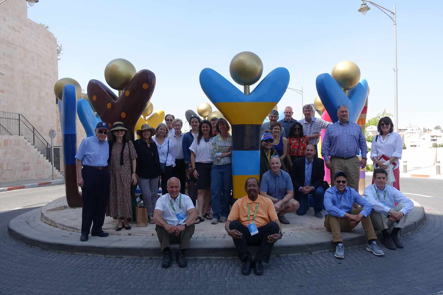
Israeli Social Action Programs with Economic Benefits
The programs we encountered ranged from think tanks and business affinity organizations promoting sector connectivity to grassroots organizations helping individuals to develop skills to work and start businesses. As examples, the group visited the site of a nonprofit, called Unistream, teaching entrepreneurial skills to ultra-Orthodox Jewish (a community that has traditionally opted out of participation in the Israeli economy) high schoolers. Unistream, whose mission is to improve Israeli society by training and mentoring underprivileged teens in entrepreneurship and leadership, is bringing its model this year to a US high school (in Rochester, NY) with majority underprivileged students, in partnership with a Rochester foundation.
We had lunch at a Tel Aviv restaurant owned and operated by Ethiopian women and heard stories about their challenging trek to Israel from Ethiopia (in the 1980s and 1990s), and the discrimination they encountered once they arrived. The female CEO of Olim Beyahad (translated into “Rising Up Together”), an Ethiopian immigrant, spoke about the organization’s success in dramatically increasing the employment rate of Ethiopian Israelis through multiple set of tools, including advocacy, image-changing and skills training.
During our visit, we also heard moving stories of women from religious communities whose lives were changed because they were taught the skills and received mentoring to start small businesses, like catering and textiles, and were provided microloans in order to launch and develop income generating micro-businesses — thus giving them the tools to escape poverty or dangerous domestic situations.
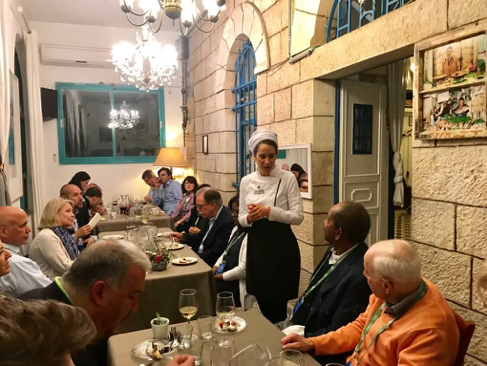
Key Takeaways from the trip for our Southeast Michigan & Western New York Group
The educational tour was inspiring and transformative in so many ways, with three major takeaways highlighted here:
1. Positive Israeli Energy and Can-Do Attitude: Risk-taking and problem-solving are integral parts of Israeli culture across the entrepreneurial, societal and governmental fronts. Israeli culture recognizes the economic benefits of social action — driven by a potent mix of pragmatic/idealistic factors: (1) Existential necessity. As we were told repeatedly, Israel is a “complicated country existing in a complex neighborhood.” Thus, the country’s isolation means its very survival is dependent upon constant innovation and self-reliance which in turn relies upon innovative approaches to seemingly intractable problems, like inventing an ongoing source of fresh water or bringing vast desert areas to life, to farm and generate a reliable food supply. (2) Economic need and demographics. Israel’s economic success, with proliferating tech companies, are resulting in more tech jobs than Jewish Israelis can fill, for instance. With Arabs representing 20% of the Israeli population, they and the other marginalized populations (e.g. women from all sectors, recent immigrants, Orthodox Jews who have opted out of the economy) are a critical talent pipeline and must be mainstreamed. (3) Tikkun olam (translated, “repairing the world”), the Jewish value of doing good deeds, underlies and animates the spirit of these approaches. This leads me to ask, how do we scale up a similar mix of existing elements in our two regions, and what would it take to replicate?
2. A “systems approach” embraces cross-over between high-tech and grassroots organizations. Cross-fertilization between the small grassroots, social action organizations and the high-tech organizations in Israel is engineered through connector organizations that help bind together different parts of the system. For instance, PresenTense, which promotes social change through entrepreneurship, offers workshops and training programs aimed at individuals in marginalized populations, such as Israeli Arabs and Ultra-Orthodox Jewish men and women — thus giving the 85% of the population, that are not part of the prosperous tech scene, the opportunity to connect to the “startup nation” scene, using entrepreneurship as personal and economic empowerment. Intermediaries, such as Start-Up Nation Central, are collecting data or acting as a central data base (acting as “honest brokers” and “information aggregators”). Another broad-scale organization, the Israel Innovation Institute — a “think and do tank” working across business sectors — enables technology to address needs in real life settings and has introduced the concept of an “innovation manager.” In other ways, mandatory military service in Israel levels the playing field among people from all backgrounds and forges a network that transcends sectors of Israeli society.
3. Think big. The group found commonality with the Israeli idealism to “think big” and identified with it. The folks we met came across as ambitious about overcoming Israel’s societal challenges and confident about developing solutions. Ironically, Israel’s very challenges (its tiny geography — not much bigger than the state of New Jersey — and the external, existential threats it faces) coupled with the drive for economic sustainability fuel its idealism and “can do” attitude. We visited the Arab town of Kafr Qasem near Tel Aviv, where Tsofen — a nonprofit founded in 2008 by Arab and Jewish high-tech and civic leaders — facilitates the movement of Arab citizens into high tech firms through a combination of targeted training programs and expanding high tech businesses into Arab communities, seeming to transcend cultural and religious boundaries. Similarly, in our communities, the drive to overcome deep-seated societal and racial challenges brought members of our group to our individual jobs, on the journey to Israel and drives “thinking big” — a dominate theme of the trip. The group wondered how we can promote more widespread ambitious thinking.
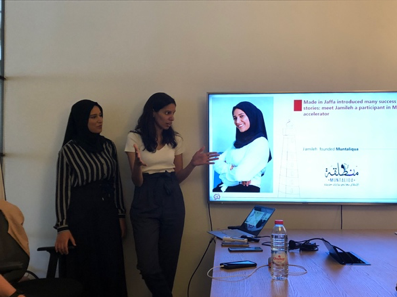
In our final debrief, the group wondered out loud how to “bottle” this energy and sense of urgency and how to replicate the systems approach. Our regions exhibit astonishing parallels. For instance, a comparable sense of urgency drives our regions to sustain recovery and keep up with the rapidly changing 21st century world economies. Economic sustainability can only occur if all of the population are taught employable skills, and they form a pipeline to fill jobs and start new small businesses.One cautionary note — efforts toduplicate the Israeli model in our communities inevitably bump up against the reality of a different central governmental role. Government is not filling the same funding and intermediary role in the U.S. as it fulfills in Israel. Our group brainstormed about ways to replicate the cohesive and inclusive network resulting from Israeli military service. Might it be helpful to harness existing cohorts in our two states – such as faith-based, veterans or other community-minded groups – as the basis for collaborative training and networking? With the proper guidance, might such groups provide some of the benefits to their members that IDF service provides Israelis?
Nevertheless, a systems approach in our regions can start with establishing more connector organizations as well as training programs that provide tools and technical assistance for all to generate business startups. The Detroit and Buffalo regions are linked by the Great Lakes, by similar trajectories, and now by professional ties that are mutually enriching.
The Foundation wants to thank and acknowledge Renee Atlas, an Israeli journalist, who documented major parts of the trip and key messages that served as a source of information for this blog.
WNY Boys & Girls Clubs get $5M to ‘usher in new era’
The Ralph C. Wilson, Jr. Foundation Announces Addition of Kawanza Humphrey to Program Committee
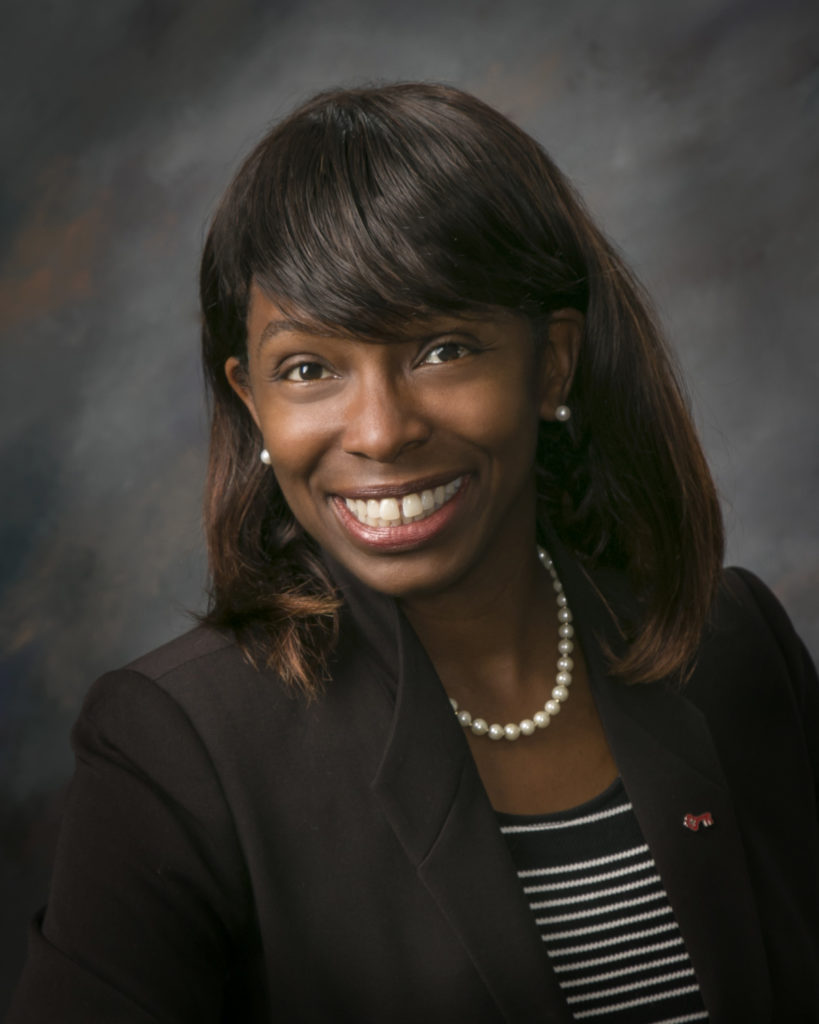
The Ralph C. Wilson, Jr. Foundation today announced the appointment of Kawanza Humphrey as a non-trustee member of the Foundation’s Program Committee. The committee, currently comprised of the Foundation’s four life trustees and three at-large trustees, reviews grant requests and provides strategic direction for the Foundation’s programmatic investments prior to final board approval.
Download Press Release