
Ralph C. Wilson, Jr. Foundation Commits $100M to Bolster Arts & Culture Sustainability, Economic Impact and Access in Southeast Michigan
DETROIT – The Ralph C. Wilson, Jr. Foundation announced today a $100 million commitment to transform the financial strength and long-term viability of Southeast Michigan’s arts and culture communities through the establishment of an endowment that will support the sector now and forever.
The Wilson Foundation will contribute nearly $60 million over 10 years to establish an endowment at the Community Foundation for Southeast Michigan. This investment will create permanent operational funding streams for 11 of the region’s largest arts and culture institutions that play a critical role as economic drivers. It also includes an annual grant opportunity for additional arts and culture organizations across the region. Once fully funded after 10 years, the endowment will generate approximately $3.75 million in annual payout to permanently support the operations and sustainability of the region’s nonprofit arts and culture organizations.
To ensure the program has immediate impact on the sector and regional economy, the Wilson Foundation will provide an additional $3.75 million annually over nine years, for a total of $33.75 million, allowing grantmaking to begin in 2022 while the endowment is built.
Finally, the Wilson Foundation is awarding a $5 million capital campaign gift to the Motown Museum, one of the largest gifts to-date for the museum’s $55 million capital campaign.
“We are building upon years of substantial investment by critical public funding streams and philanthropic funders that have helped these institutions become the cultural treasures and economic drivers they are today,” said David Egner, president & CEO, Ralph C. Wilson, Jr. Foundation. “As a regionally focused foundation with a limited life, we saw a unique opportunity to make this significant contribution to impact the region’s quality of life and economy through jobs, tourism and more. We hope this annual operating support will help to strengthen the financial condition of these institutions allowing them to continue to develop creative, audience-centered initiatives that make them more inclusive, welcoming, and accessible places for all.”
Of the $3.75 million in annual funding, a total of $3 million will be dedicated to the following 11 institutions including their annual grant allocation: Arab American National Museum ($100,000 annually); Charles H. Wright Museum of African American History ($300,000 annually); Detroit Historical Society ($200,000 annually); Detroit Institute of Arts ($700,000 annually); Detroit Symphony Orchestra ($700,000 annually); Detroit Zoological Society ($150,000 annually); Holocaust Memorial Center ($100,000 annually); Michigan Opera Theatre ($200,000 annually); Michigan Science Center ($200,000 annually); Motown Museum ($200,000 annually); and The Henry Ford ($150,000 annually).
The overall impact of these gifts is significant as these unrestricted funds can be designated for general operating needs. Each organization will also co-design, in partnership with Community Foundation and national consultants, metrics and benchmarks that support their goals and strategic plans.
The Wilson Foundation is also dedicating $500,000 annually to support other arts and culture nonprofits, primarily of small to medium size, across the seven counties of Southeast Michigan. These funds will be deployed flexibly based on organizational and community needs. The first grants will be awarded by the end of 2022.
“From arts organizations that anchor a neighborhood to ones that anchor a region, these creative businesses make significant contributions to the economic health and growth of communities, and the Federal Bureau of Economic Analysis supports this insight with data showing the arts industry as larger than construction, transportation, and agriculture,” said Omari Rush, executive director, CultureSource. “The attention this Wilson Foundation investment gives to wide-ranging arts groups is a beacon of opportunity for any policymaker, philanthropist, or agency looking to drive economic development. It is a provocation to shift narratives from the arts being nice to the arts being essential.”
The remaining $250,000 in annual funding will support permanent capacity at the Community Foundation for Southeast Michigan to manage and operate this endowment and grant program, which includes leading the efforts to advance inclusion and access within the grantees individual operations and the sector. The Community Foundation, together with CultureSource, will launch community conversations to help build capacity for adaptable and inclusive arts organizations. Local arts and culture organizations can sign-up to participate at https://cfsem.org/initiative/wilson-arts-and-culture-investment.
“The vision of the Ralph C. Wilson, Jr. Foundation to make such a significant investment in our regional arts and culture organizations is transformational and will serve the residents of southeast Michigan for generations to come,” Mariam Noland, president, Community Foundation for Southeast Michigan.
Since its inception in 2015, the Wilson Foundation has paid out more than $540 million in grants, including nearly $100 million within its “Entrepreneurship and Economic Development” focus area. In Southeast Michigan, this has included support for major projects including the New Economy Initiative’s Inclusive Small Business Network Fund, Detroit’s Strategic Neighborhood Fund, Enterprise’s Community Development Organization Fund and more.
“While arts and culture are not specific funding priorities for the Wilson Foundation, the pandemic laid bare the fragile operational health of this critical sector of our economy,” said Eugene Driker, life trustee, Ralph C. Wilson, Jr. Foundation. “Witnessing the subsequent struggles within this sector, the Foundation trustees made the decision to address this broadly with a one-time strategic approach through the lens of our economic development focus area. Consistent with Ralph Wilson’s philosophy of giving, reflected in how he structured his foundation, our aim with this historic gift is to make an immediate and significant impact. We know there is more to be done and hope it will inspire many others to fund operations of cultural organizations across the sector and help further build their endowments.” The mission and administration of the Wilson Foundation’s arts and culture funding program are mirrored in Western New York, its other region of focus, with the Community Foundation for Greater Buffalo as the managing partner. The following institutions in western New York are receiving endowment grants: Buffalo AKG Art Museum (formerly, Albright-Knox Art Gallery), Buffalo & Erie County Naval & Military Park, Buffalo History Museum, Buffalo Museum of Science, Buffalo Philharmonic Orchestra, Buffalo Zoo, Burchfield Penney Art Center, Explore & More: Ralph C. Wilson, Jr. Children’s Museum, Frank Lloyd Wright’s Martin House, Michigan Street African American Heritage Corridor and anchor institutions, National Comedy Center, Shea’s Performing Art Center and The Strong National Museum of Play. Additionally, the Buffalo AKG Art Museum and The Strong Museum of Play are each receiving $5 million capital campaign grants.
The Ralph C. Wilson, Jr. Foundation is a grantmaking organization dedicated primarily to sustained investment in the quality of life of the people of Southeast Michigan and Western New York. The two areas reflect the devotion of Ralph C. Wilson, Jr. to his hometown of Detroit and greater Buffalo, home of his beloved Buffalo Bills NFL team. Prior to his passing in 2014, Mr. Wilson provided that a significant share of his estate be used to continue a life-long generosity of spirit by funding the Foundation that bears his name. Based in Detroit, the Foundation began with a grantmaking capacity of $1.2 billion over a 20-year period, which expires January 8, 2035. This structure is consistent with Mr. Wilson’s desire for the Foundation’s impact to be immediate, substantial, measurable, and overseen by those who knew him best. For more information visit www.rcwjrf.org.
2020 Annual Report
Opinion: Out-of-school programs prepare students for success, help families
Chandler Park Skatepark opens on Detroit’s east side
Free skateboarding lessons will be available for kids ages 8 to 13
Read the full article at »Pontiac revival: How a collaborative is building momentum, and funding, for inclusive local projects
Thanks to a $13,300 Capacity Building for Nonprofits grant from the Pontiac Funders Collaborative (PFC), FPP is developing a strategic plan to shape its future and its long-term goals.
Read the full article at »A Farewell to our CMF Philanthropy Fellows
Beginning in 2019, the Foundation hosted our inaugural cohort of Philanthropy Fellows via the Council of Michigan Foundations. During their two years at the Foundation, Margaret Zimmer, Olivia Vaden, and Jesse Friedman made meaningful contributions to the Foundation, but also the larger nonprofit communities of Western New York and Southeast Michigan. We’re grateful for their work and look forward to witnessing their continued growth as emerging philanthropic leaders.
As their time at the Foundation comes to a close, we sat down with the Fellows to chat about their experience at RCWJRF and any advice they had for the incoming cohort of fellows.
What was the most memorable experience you had during your fellowship?
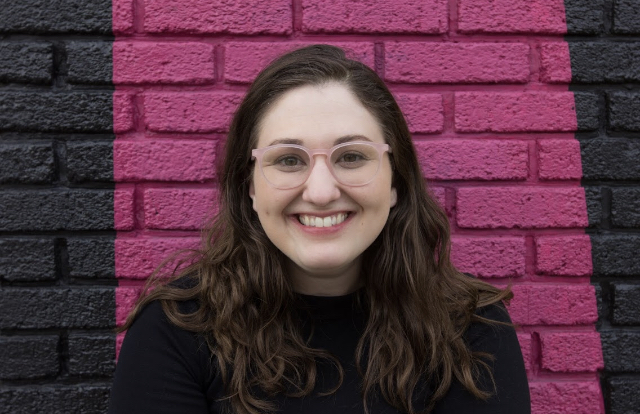
MARGARET: I enjoyed the opportunity to work alongside Pam Lewis and the New Economy Initiative staff as they embarked on an 8-month Small Business Survey and Ecosystem Scan in Detroit and Wayne County. This work garnered insights from small business owners facing challenges accessing Federal COVID-19 relief funds and their overall positive sentiments about business rebounding in the wake of the pandemic.
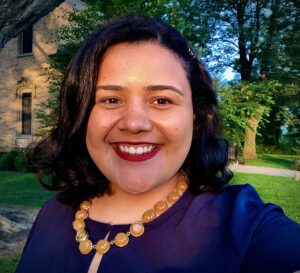
OLIVIA: The most memorable experience I had during my time as a fellow was the Buffalo faith leaders convening in March 2020, literally the day the world shutdown. The event was intended to bring together faith leaders in Buffalo to sort of gauge the need of caregivers, but also understand what faith leaders needed to better serve caregivers in their congregations. Great ideas and stories were shared that day and then we left, and everything changed. It was the last time I met with anyone in person until July 2021 and I hold it as the best experience because it was one of the few moments I have in philanthropy that really exposed me to the very real human aspect to grantmaking.
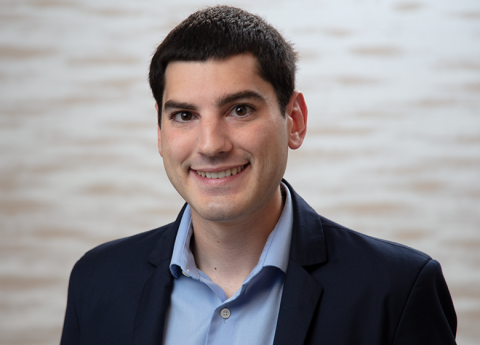
JESSE: Two things come to mind. First, navigating the pandemic. As the first set of fellows, our roles and responsibilities were already changing on the fly, but the pandemic really changed the trajectory of our time here with the Foundation. Working remotely while still supporting more frequent board meetings to get COVID-19 response funds out the door was amazing, and I am grateful to have been part of the effort.
I also want to mention Generator Z. I had several roles as the project evolved but being a copy editor was memorable for me. I have a youth development background, so I was already drawn to the initiative, but as a copyeditor I got to read about 500 generator stories, and it was incredibly inspiring. The young people who responded were so real, brought great ideas to the table, and I hope we see great impact from the grants we made in July.
What is the most impactful thing you learned during your time at the Foundation?
OLIVIA: The most impactful lesson I learned during my time at the Foundation was that this is all bigger than any one foundation, any one program area, or any one grant. The need, disparities, and injustices our communities face is bigger than philanthropy and what philanthropy can do, and the solution doesn’t lie with one initiative.
MARGARET: Learning the grantmaking process from the ground up has been such an exciting experience. Having taken the Fellowship with a non-philanthropy background, I feel this experience has shown me all facets of grantmaking, including research, due diligence, grant writing, and evaluation. The role provided exposure to so many aspects of philanthropy, and I know I’ll utilize those skills throughout my career.
JESSE: I learned that philanthropy and equity go hand-in-hand, and that Foundations, including RCWJRF, are uniquely positioned to advance equity and disrupt inequitable systems. I am glad to see so many institutions centering equity in their work and I am excited to see how the Foundation continues to do through its grantmaking and strategy initiatives.
What advice do you have for the incoming philanthropy fellows?
JESSE: My advice to incoming Fellows would be to ask lots of questions and explore your interests in the context of philanthropy. You probably have a passion for one or more of RCWJRF’s program areas, so don’t be afraid to get yourself involved with projects pertaining to those topics. This is designed not only as a path into philanthropy, but a learning and development experience as well. So, please take advantage of that and learn as much as you can. The rest of the Wilson team only wants to help… so ask away!
OLIVIA: Be open, be curious, and never stop asking questions. Philanthropy is going through an evolution and fellows are in a position to observe and report. If you feel something should be different, or maybe hasn’t been considered, SAY IT. You’re there for a reason.
MARGARET: I think a willingness to dig into any project goes a long way!
The State of Economic Equity in Detroit
$380K grant supports ideas for teen after-school programs in Washtenaw, Livingston counties
Teens from Washtenaw and Livingston counties have been granted funds for their after-school program ideas. The grants were given by Generator Z, an ideas lab that launched in 2020 to help teens reimagine after-school activities.
Read the full article at »Generator Z Announces $4 Million+ in Grants in Response to 1,000 Teen-generated Ideas Reimagining Afterschool Programs
More than 90 providers across Southeast Michigan and Western New York receive funding to turn ‘Gen Z’ insight into community action;
Initiative supported by the Ralph C. Wilson, Jr. Foundation
represents new approach to philanthropy
DETROIT – Generator Z, an ideas platform that launched in 2020 for teens to reimagine the future of afterschool, today announced 93 grants totaling $4,093,181 for nonprofit afterschool providers serving teens in Southeast Michigan and Western New York. Generator Z is an innovative philanthropic initiative driven by teens and powered by Lakeshore Connections with support from the Ralph C. Wilson, Jr. Foundation. Grants ranging between $10,000 and $100,000 were awarded to providers with the strongest teen-centered afterschool ideas.
“Often teens are told that they can’t really have a voice, but Generator Z did the opposite. It got me out of my comfort zone which is good because I usually like to stay in my own bubble. I shared my own story and then saw afterschool providers do an amazing job responding to Generator insights,” said Zoey L., a 14-year-old ‘Generator’ from Western New York. “They developed and pitched programs that sounded fun and could help motivate more teens to join afterschool programs. I like the way that providers took specific examples from a teen’s story and then showed how it impacted or inspired their program.”
“To actually have influence over afterschool opportunities was really important. A wise person once told me to never trust someone who says they work in your best interest but never invites your opinion,” added Charles D. age 18, of Southeast Michigan. “The participation of so many teens of so many different ages and places built trust and led to these grants. When I helped select grantees, I paid attention to language and how they spoke to me. That really helps me believe in an organization and what they have to offer.”
In late 2020, more than 1,000 teen “Generators” across Southeast Michigan and Western New York (the Foundation’s two regions of focus) were invited to share their vision for the future of afterschool on generator-z.org. In January 2021, their stories were published on the public platform, providing these 13- to 18-year-olds with a podium during a time when their everyday lives were disrupted by a global pandemic, racial injustice, and political tension. Nonprofit afterschool providers were then invited to apply for grants that responded to the Generators’ stories. A committee of teens, adult allies and near-peers served as judges to recommend and prioritize grant support. Over three-phases of engagement, teen “Generators” are collecting up to $1,000 for their participation, valuing them as the ultimate experts of their own lives.
-more-
“Generator Z is nothing without the teens that drive it. They are at the center of every decision,” explained Generator Z Initiative Director Abir Ali. “They collaborated in its design, set the tone through their story contributions, and provided a reality check on afterschool provider ideas. They took full ownership of this public platform and made sure that those applying for grants were listening to teens. From the beginning, the demand for teens to be heard for what they genuinely had to say was non-negotiable. They used this lens to ultimately select the most relevant and responsive afterschool ideas and opportunities.”
The Generator Z initiative is also noteworthy for a level of transparency that is atypical of foundations and their grantmaking processes. By having teens – the ultimate targets of the grant funding – at the core, organizers have in a sense flipped the traditional philanthropy model upside down.
The Generators’ stories and ideas centered around 10 teen-generated themes from an earlier process. Grants were awarded as follows:
- Creative Arts & Culture: 19 providers/$840,754
- Jobs & Careers: 13 providers/$715,560
- Friends & Community: 15 providers/$694,975
- Mental, Social & Emotional Health: 10 providers/$477,415
- Identity & Acceptance: 13 providers/$469,310
- Excellence in Learning: 8 providers/$328,413
- Play & Sports: 5 providers/$212,000
- Life Skills & Balance: 5 providers/$186,900
- Growth & Wellness: 3 providers/$92,857
- Fun & Games: 2 providers/$75,000
“We were inspired to see such a wide spectrum of organizations participate in Generator Z and engage with teen stories, especially given the uncertainty and challenges throughout the pandemic,” said Amber Slichta, Vice President of Programs with the Ralph C. Wilson Jr. Foundation. “The heart of this initiative is to create more opportunities for teens outside of school that reflect what teens want. Taking cues from teens all along the way and the nonprofits that are skilled at teen engagement, we built a grantmaking initiative on those best practices to amplify and expand the reach of teen voices, while providing nonprofits with the support and resources to make afterschool ideas come to life.”
For the full list of grants, visit https://generator-z.org/afterschool-ideas and search by “2021 Grantees.” Each will have one year to bring their afterschool ideas to life. Generators have completed their first two steps of catalyzing the initiative with their stories and feedback on afterschool providers’ ideas. They will return in early 2022 to check on grantee progress and close out their contributions to the Generator Z project.
For behind-the-scene insight into Generator Z, watch our 10-minute highlights video here.
The Ralph C. Wilson, Jr. Foundation is a grantmaking organization dedicated primarily to sustained investment in the quality of life of the people of Southeast Michigan and Western New York. The two areas reflect Ralph C. Wilson, Jr.’s devotion to his hometown of Detroit and greater Buffalo, home of his Buffalo Bills franchise. Prior to his passing in 2014, Mr. Wilson requested that a significant share of his estate be used to continue his life-long generosity of spirit by funding the Foundation that bears his name. Based in Detroit, the Foundation has a grantmaking capacity of $1.2 billion over a 20-year period, which expires January 8, 2035. This structure is consistent with Mr. Wilson’s desire for the Foundation’s impact to be immediate, substantial, measurable and overseen by those who knew him best. For more information visit www.rcwjrf.org.
Lakeshore Connections is a non-profit charitable corporation that supports Community Connections of New York (CCNY). The Ralph C. Wilson Jr. Foundation has partnered with CCNY in the past for initiatives like STEM 2035. Lakeshore is a grant-issuing body to fund organizations closely aligned with its mission to provide human-services programs that improve and protect communities’ emotional health and welfare, supporting the physical, mental, social and spiritual needs of children and families. CCNY provides training, analysis and strategic development services to 501(c)(3) human services agencies to help them improve their programming and increase public benefit. CCNY originally provided its services in Western New York and is expanding its activity throughout New York State and Michigan with support from Lakeshore Connections. More at https://www.lakeshoreconnections.org/
Media Contacts:
Kelci Hobson, kelci.hobson@berlinrosen.com, 973-886-3839
Carly Strachan, carly.strachan@rcwjrf.org, 313-460-8100
Detroit Riverfront Conservancy gears up to give West Riverfront Park a big makeover and a new name
The sun seems to be shining brightly on Detroit’s West Riverfront Park right now. In March, the Detroit Riverfront Conservancy, which owns the 22-acre park, was awarded a new $500,000 grant by the Ralph C. Wilson, Jr. Foundation to support a new garden and other improvements there. And the conservancy is now preparing to kick off a massive redevelopment that will bestow a new name, Ralph C. Wilson, Jr. Centennial Park, on the recreation area later this year.
Read the full article at »