

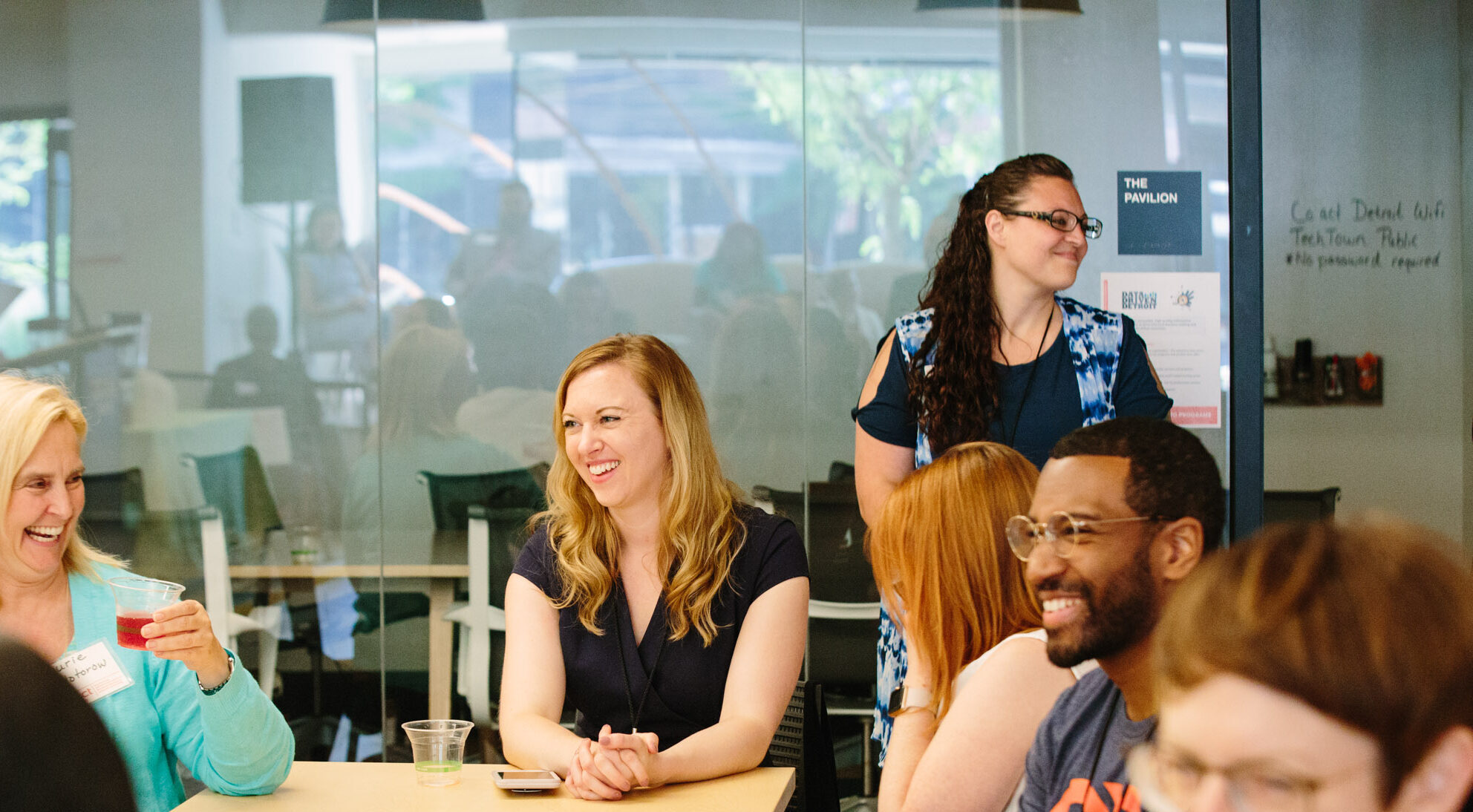
No Wrong Door: A Stronger Support System for Nonprofits
The Infrastructure Behind the Impact
By: Eric Phamdo, Senior Program Officer of Nonprofit Support and Innovation, and Entrepreneurship and Economic Development
November 2026
In The Infrastructure Behind the Impact, Eric Phamdo, the Ralph C. Wilson, Jr. Foundation’s Senior Program Officer of Nonprofit Support and Innovation, explores why strong nonprofits need strong, connected systems of support. Through this mini-series, he shares insights from the Foundation’s first 10 years of partnership and makes the case for investing in the infrastructure that helps nonprofits build capacity and sustain their impact. Read the first installment, “Is Capacity funding Alone Missing the Bigger Picture? Why an Ecosystem Approach Benefits Nonprofits” for more.
Connected Challenges Call for Connected Solutions
The organizations our communities rely on most are navigating increasingly complex, interconnected challenges. Economic instability, persistent inequities, shifts in public funding and growing community needs don’t exist in isolation. These systemic pressures overlap and reinforce one another. A nonprofit loses public funding, forcing difficult staffing decisions, just as environmental challenges intensify, and more people turn to the organization for support. Remaining staff take on greater responsibilities, while leaders must make increasingly difficult decisions with fewer resources. Each challenge compounds the others, and now everyone is feeling the pressure.
This is what the sector is calling a polycrisis. As described in The Foundation Review, A Philanthropic Theory of Systems Transformation for Advancing Equity in the Polycrisis, a publication of Grand Valley State University’s Dorothy A. Johnson Center for Philanthropy, a polycrisis involves overlapping, mutually reinforcing crises that intensify one another and become increasingly difficult to address independently.
In my work with nonprofits, I’ve come to understand the implications of these overlapping crises and the domino effect they can create for staff and the beneficiaries of their services. But it’s during these difficult moments that I am reminded of the ingenuity and adaptability of the nonprofit ecosystems we’re honored to work with at the Ralph C. Wilson, Jr. Foundation. If the challenges we face are interconnected, our solutions must be, too. That’s why we look toward coalitions like the Transforming Solidarity Collective (TSC) in Southeast Michigan (SEMI) to understand how an entire nonprofit ecosystem can get what it needs.
The TSC, made up of Co.act Detroit, Community Development Advocates of Detroit (CDAD), Michigan Community Resources (MCR), Michigan Nonprofit Association (MNA), and Nonprofit Enterprise at Work (NEW), demonstrates what it looks like to meet layered systemic challenges with equally layered, coordinated solutions. As Madhavi Reddy, one of the collective’s founding leaders, has described it, a polycrisis calls for poly-solutionaries: people bringing different perspectives and expertise together to address challenges no single organization can solve alone.
A No Wrong Door Approach to Nonprofit Support
Those relationships help staff across TSC organizations connect nonprofits with the right expertise, regardless of where they first turn for help. Just last year, MCR brought on an intake coordinator who serves as a “front door,” identifying challenges and helping ensure nonprofit leaders are directed to the right place when they reach out for assistance.
“My role is to understand what nonprofits are facing and ensure that we address their needs comprehensively, whether that’s within MCR or across the TSC. when a large Detroit-based community impact network came to us navigating changes to Medicaid funding and exploring new partnerships, I brought together MCR, MNA and NEW for a joint intake conversation. Each organization brought different expertise, from governance and legal guidance to financial management and advocacy. Instead of asking the organization to navigate those resources separately, we were able to coordinate a response that addressed their needs from multiple angles.”
Zack Bissell, Intake Coordinator, Michigan Community Resources
It’s clear the issues nonprofits work to solve don’t exist in a vacuum, they frequently intersect one another. An organization seeking funding may also need legal help, and one seeking operational support may also need to build internal capacity. Over six years, the TSC has shown that it doesn’t matter which door a nonprofit knocks on first, what matters is having a connected network that can help organizations identify and access the support they need.
Building Trust, Strengthening Nonprofits
I’ve seen this come to life through Detroit-based organizations like Got Grief House (GG’s House) which provides grief support, resources and community programming for children, adults and families. Julie Weatherhead, the organization’s co-founder, accessed connections through Co.act, and when GG’s House needed guidance on forming its board and bylaws, MCR was there to help. With that support, GG’s House staff could spend less time navigating operational protocols and more time supporting families through some of the most difficult moments in their lives.
Class Act Detroit, which uses hip-hop music and culture to engage young people through arts education and community programming, offers another example. Its founder and executive director, Rashard Dobbins, began the organization in his own home before expanding into the House of Hip Hop, a 13,000-square-foot community space. Rashard initially approached Co.act with skepticism.
I don’t have time to know what all those different orgs do on that level, and that’s not what I care about, I care if I’ve experienced it. You know, I care if I trust you.
Rashard Dobbins, Founder and Director, Class Act Detroit
For Rashard, despite his initial skepticism, Co.act ultimately became a trusted entry point into a broader network of support. That’s the promise of the TSC’s no wrong door approach: making a complex support ecosystem easier to navigate so nonprofit leaders can spend less time finding their way through it and more time advancing their missions.
Investing in the Infrastructure Behind the Impact
What makes this ecosystem approach possible is the deliberate coordination of different areas of expertise, supported by relationships, shared process and a commitment to collective problem-solving. No single organization can meet every need, but together, these organizations can build a system of support that is more responsive than any could provide independently. Through our partnership with the TSC, I’ve come to appreciate how much intentional work happens behind the scenes to make this coordination possible. Members meet regularly to strengthen relationships, maintain shared intake and referral processes, document assistance and follow up to ensure nonprofits receive meaningful, sustained support.
The resulting trust built from support organizations collaborating as a cohesive system encourages them to share plans and pursue funding collectively. While their processes are always evolving and being strengthened, the goal of our work at the Foundation is to ensure these relationships are supported and have the capacity to serve SEMI nonprofits long after our Foundation sunsets.
Sustaining that infrastructure requires investment.
In Western New York, Nonprofit Support Group (NSG), a funder collaborative, exists specifically for that reason: to connect nonprofits to the tools and resources they need to drive impact. NSG shows that funders, not just nonprofits, can coordinate support, and that pooled investments can create a broad multiplier effect across the sector.
No single nonprofit or intermediary can carry every challenge of the polycrisis. For philanthropy, this lesson extends beyond the importance of supporting individual nonprofits. Strengthening the sector also requires investing in the relationships, shared expertise and coordinating infrastructure that allow nonprofit support organizations to work collectively.
These investments may be less visible than individual programs or services, but they are essential to building a nonprofit ecosystem equipped to respond to complex and ever-evolving challenges.
But finding help is only the first step. How do we ensure that support reflects what an organization actually needs? I’ll explore that next through NSG’s connection to the Impact Capacity Assessment Program (iCAP) in Western New York.
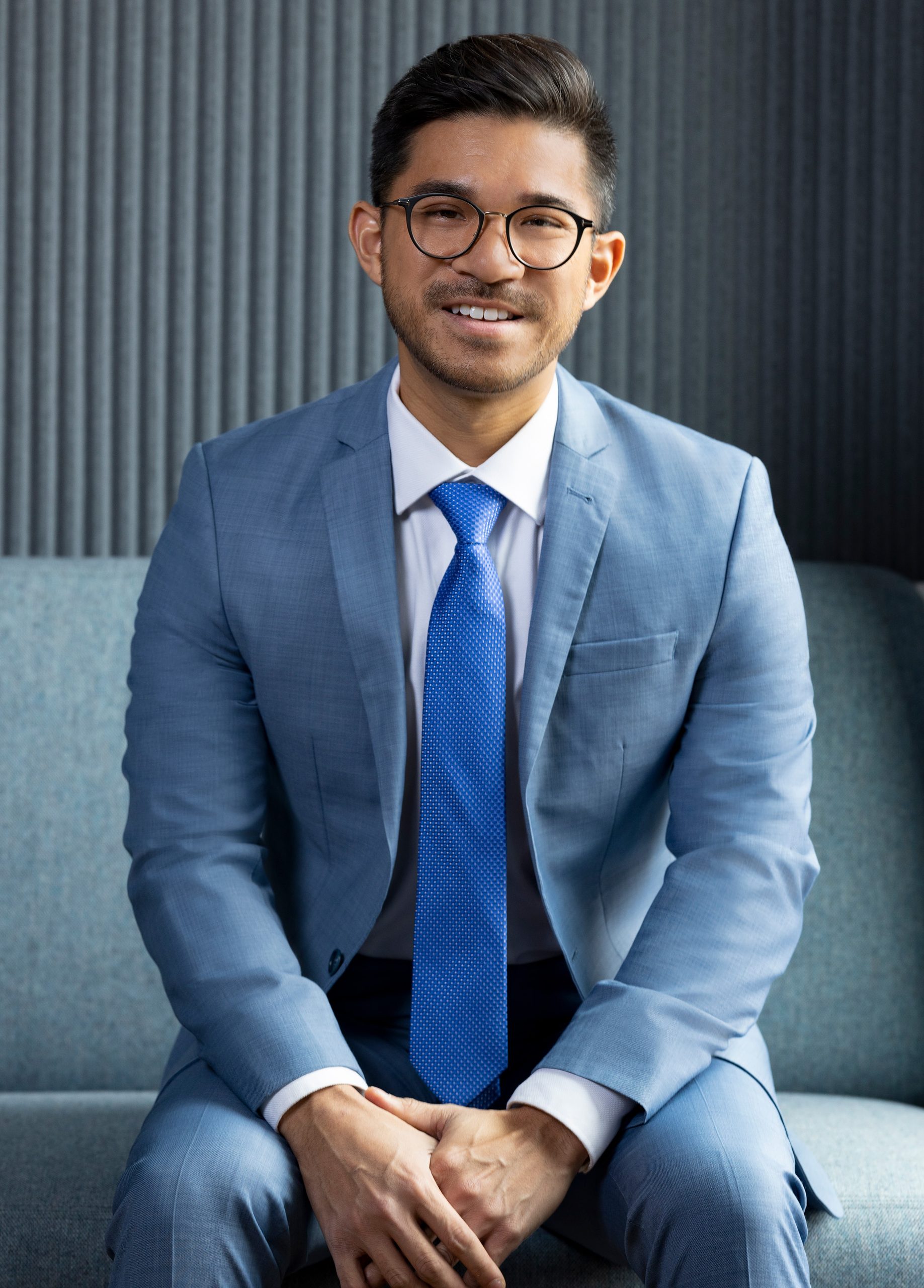
Eric Phamdo is a senior program officer at the Ralph C. Wilson, Jr. Foundation, where he supports nonprofit capacity building and place-based economic development across Southeast Michigan and Western New York. Through the Foundation’s Nonprofit Support & Innovation initiative, he works with intermediary organizations and fellow funders to strengthen the resources and connections nonprofits rely on to serve their communities.
Eric’s work centers on expanding access to capacity building support and encouraging collaboration across the Foundation’s two regions. He holds bachelor’s and master’s degrees from the University of Rochester, where he studied cross-cultural psychology, sustainability and business administration, and a Public Leadership Credential from the Harvard Kennedy School.