

Welding training program empowers women in male-dominated industry
Women Who Weld is a skills-building program, and a lifelong community of support
By Randiah Camille Green
July 13, 2026
This sponsored story was originally published by Outlier Media
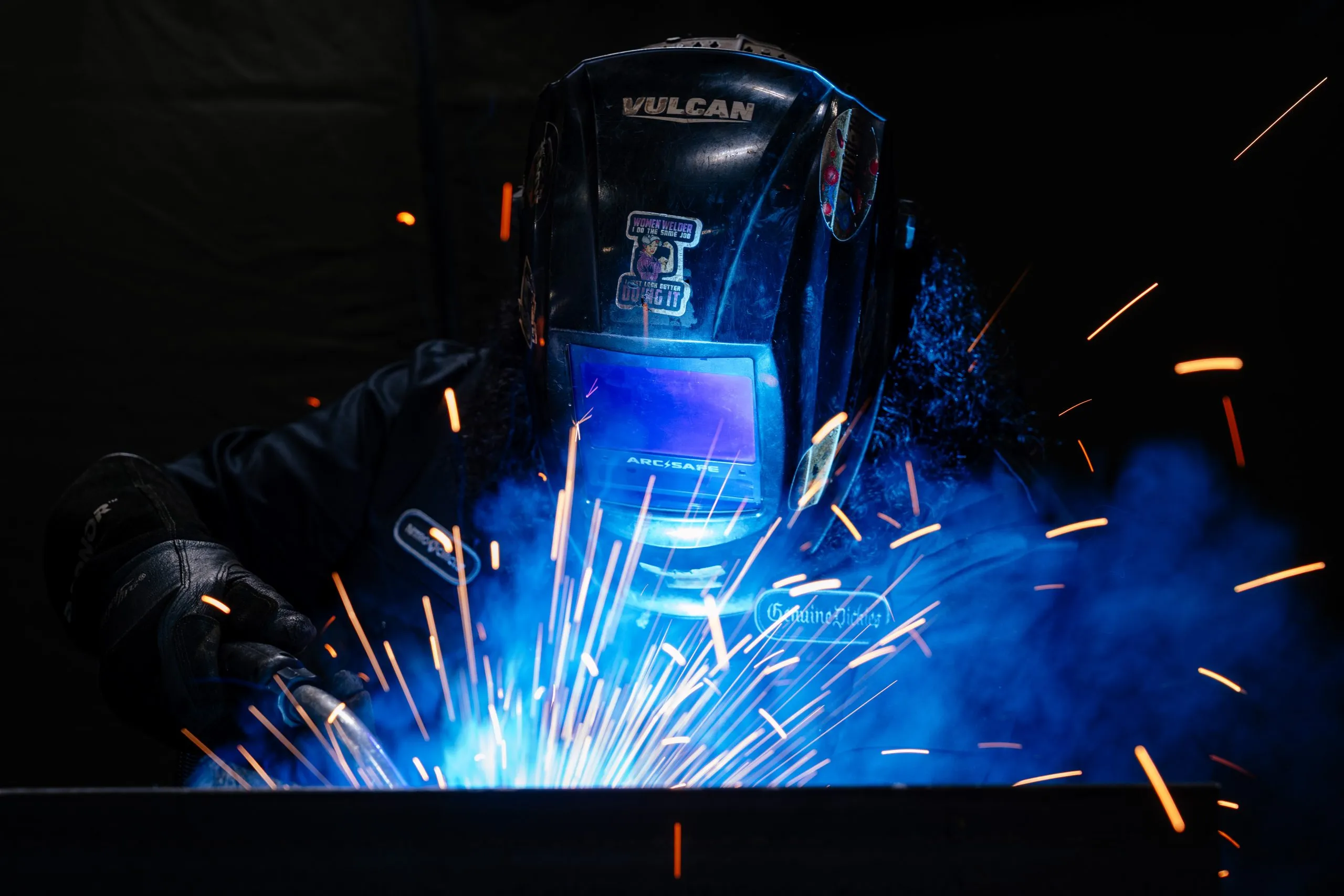
This story was written by Randiah Camille Green and created in partnership with the Ralph C. Wilson, Jr. Foundation. It is part of a year-long series focusing on programs and pathways to good paying jobs and careers in Detroit.
Teia Moore has held a wide variety of jobs, covering several job sectors. She’s been a school lunch lady and ran an adult foster care home, before she began working in manufacturing, which she said felt most aligned with her skills and interests. But she was devastated when, after trying to advance in the industry, she was denied a spot in a welding apprenticeship program – she said because she is a woman.
So, when a friend told her about Women Who Weld, she jumped at the opportunity, hoping being surrounded by other women would allow her to learn the skills she wanted, while being in a supportive environment. She was right. Moore completed an intensive training program with Women Who Weld in 2019, and is now working as a fabricator, able to execute entire projects, from blueprint to completion.
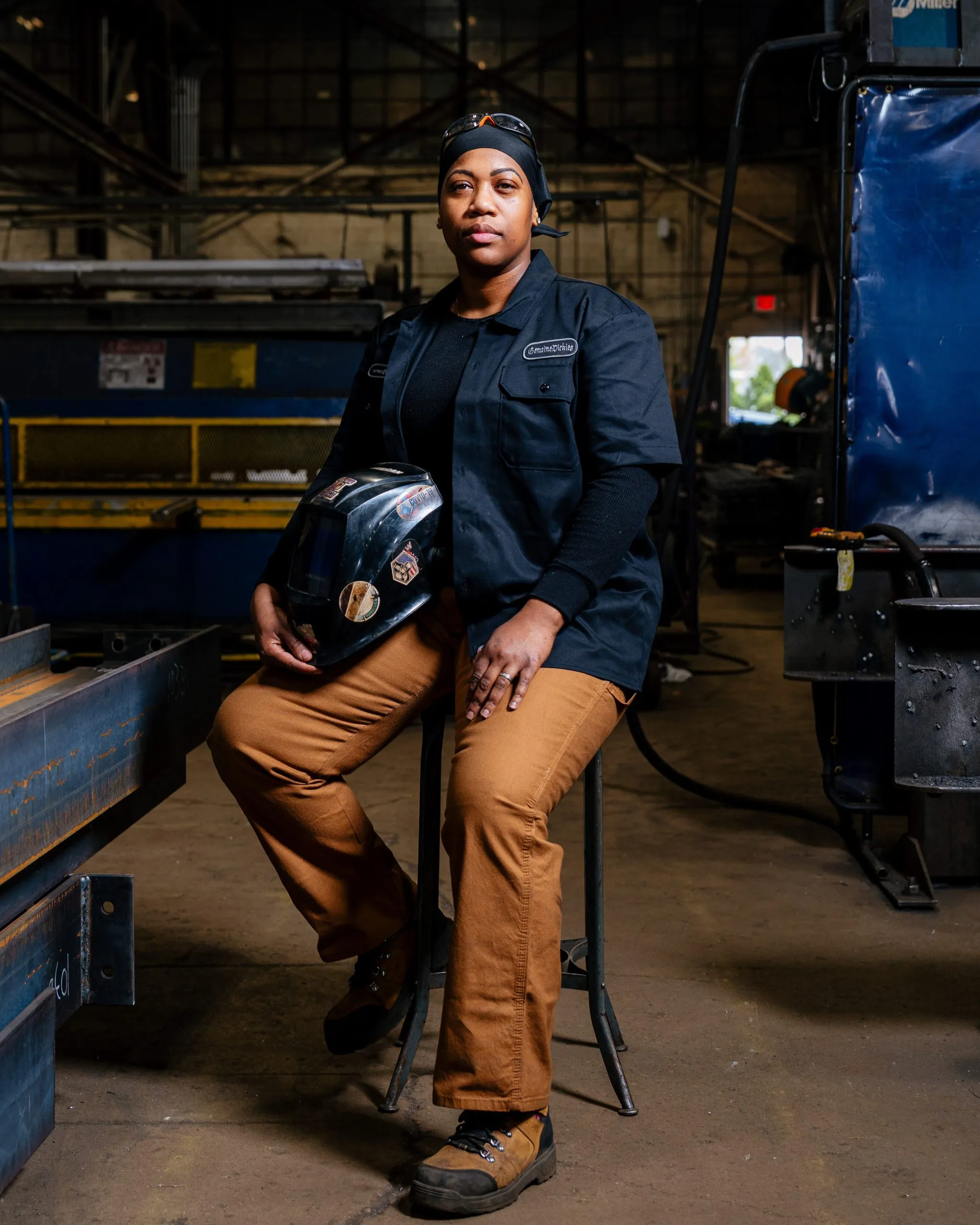
Women Who Weld offers a week-long intensive that teaches women the foundations of welding, and prepares them to enter the industry, all for $800. The organization also hosts a one-day introductory workshop for $125, for those who need a little more exposure before making the week-long commitment. These classes are partially subsidized, offering a steep discount from the estimated $3,500 that it costs to provide the week-long training. The Ralph C. Wilson, Jr. Foundation has supported these classes through its grantmaking since 2023.
“I was surrounded by women who were taking it as seriously as I did, because they’re used to being denied too,” Moore said. “They really teach more than just how to weld. They prepare you for the workforce, help you fill out applications, and really set you up for success… They show you what to do and what to say when you walk in the door, because, as a woman, you do have to work a little harder, and [potential employers] are looking at you a little funny.”
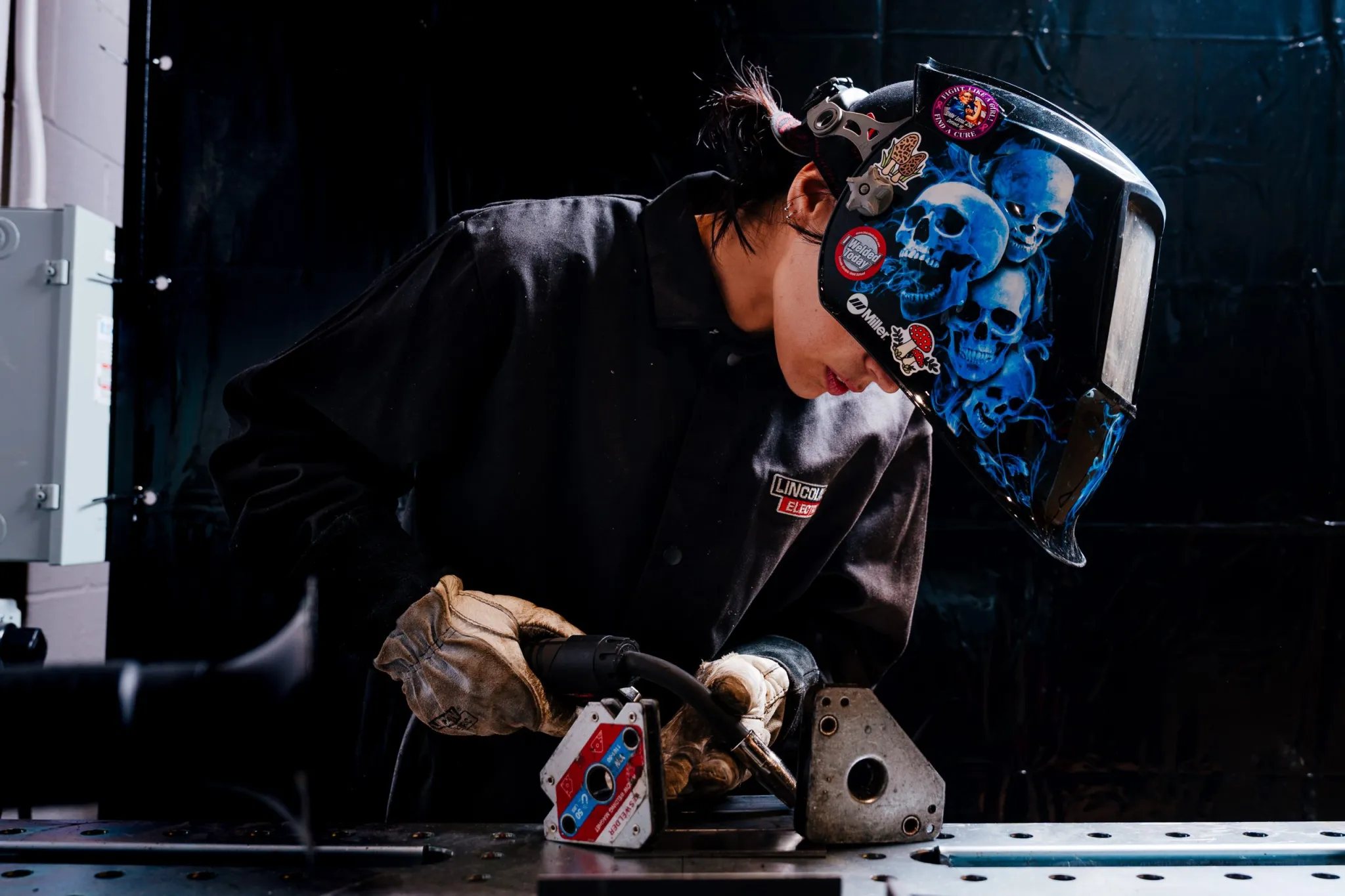
Moore has gone on to work in production welding, joined the Sheet Metal Workers union, and now specializes in producing metal handrails. She has built parts for ambulances and firetrucks, and also worked on the 26-foot Menorah, for the Menorah in the D celebration at Campus Martius. She said she feels “welding is a woman’s job [because] it requires patience and attention to detail,” adding that these handcrafted details show up in many items used on a daily basis.
“Welding is in everyday life. People don’t understand, most of the chairs you sit on, they have welds. Your tables have welds. It’s part of everything. And that lets you know that you’re always gonna have a job,” Moore said.
Samantha Farrugia established Women Who Weld in 2014. While she was studying at the University of Michigan for her master’s in city planning, she took a welding course. She had grown up watching her jeweler father set diamonds, and always had an interest in welding.
“I instantly loved it,” she said about the university welding class. “But I looked around and thought, ‘Why aren’t there more women in this fabrication lab?’ My master’s program was dominated by women, yet they weren’t in the fabrication lab, even though they had access to it.”
When she started the organization, Farrugia just wanted to teach welding so that other women would feel as powerful as she felt while doing it, but she later realized there was a huge demand in the industry. And when she’d go on interviews for city planning jobs, after completing her master’s program, potential employers saw Women Who Weld on her resume and convinced her that that’s what she should be doing instead.
“I thought it would just be a summer camp type program, but [potential employers] would tell me, ‘No, that’s your purpose,’” she remembers.
Women Who Weld has trained roughly 750 participants, many of whom have gone on to become production welders, sheet metal workers, fabricators, and iron workers. The organization is even a registered pre-apprenticeship for the Iron Workers Union.
Ali LaBorde is now an iron worker apprentice with the Iron Workers Union, Local 25, after completing Women Who Weld’s weeklong intensive in 2025. The skills she learned through Women Who Weld, along with the organization’s positive reputation, helped her land a four-year apprenticeship with the union.
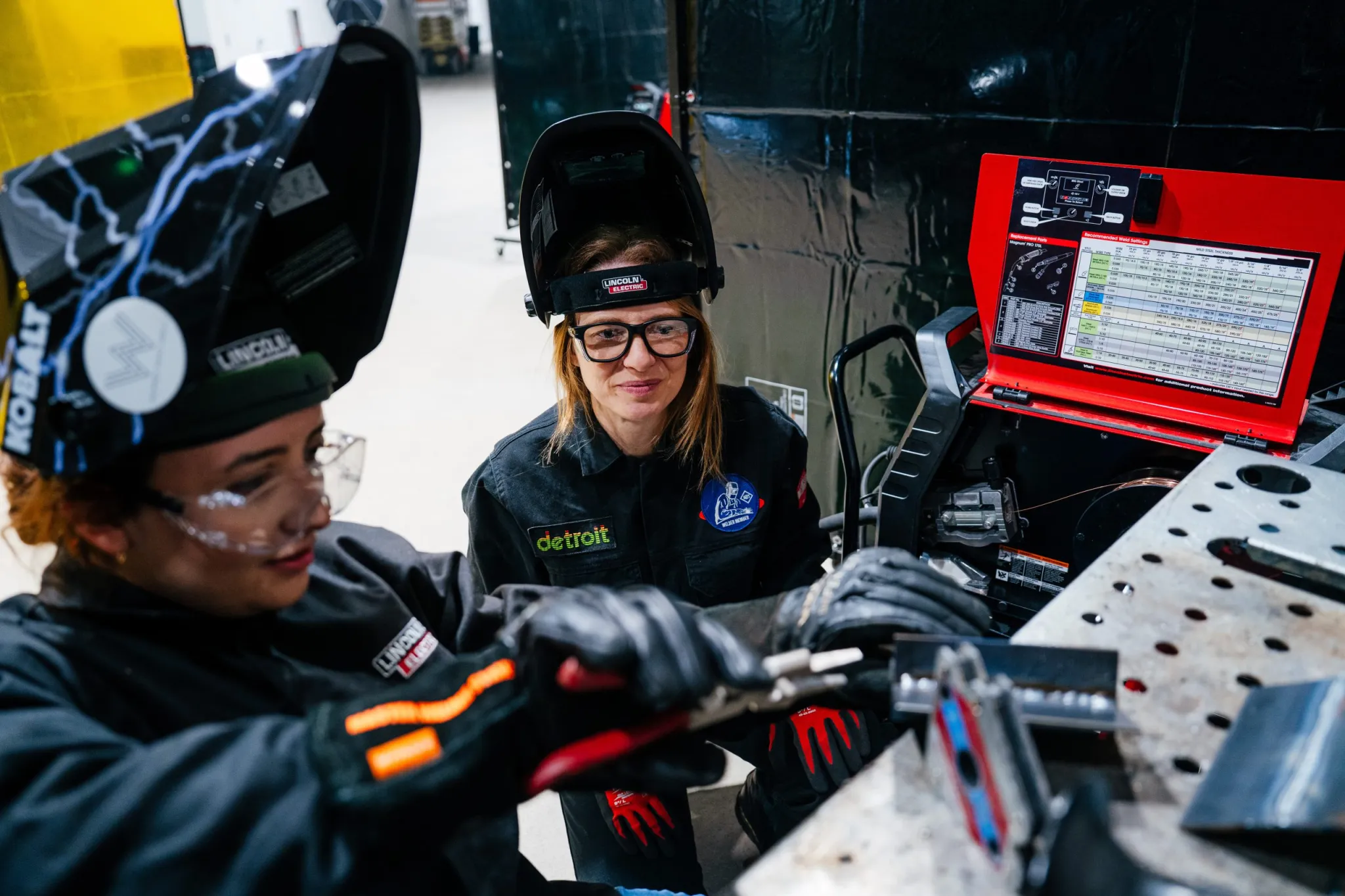
“Going through Women Who Weld was a huge confidence builder. … I may be going into this apprenticeship where I’m going to be over my head for four years, but at the very least, I know I can weld. I know I’m confident in a weld booth and I can hold my own,” LaBorde said. “And not only was it encouraging to see women in the field, but Samantha was actually the one who really encouraged the Iron Workers Union for me. She gave me the phone number for the apprenticeship coordinator… and they’re like, ‘Oh Women Who Weld, we had one of their participants before and they were great.’”
Having previously completed the one-day intro course, LaBorde participated in the subsidized weeklong course after learning she was about to get laid off from an office job. She’d started the job during the pandemic to help pay her bills, but it made her miserable. So, she took the opportunity to launch her career as an iron worker.
“Welding is intimidating. It’s hot, there’s sparks, it’s electricity. You look at it and you’re like, ‘Man, that’s cool but I don’t know if I can handle that,’” she said. “So the one-day course was a lot of like, just get in there and try it. That was a great introduction to get over that hump of it being scary. Then the weeklong course really pushed my limits. It really progressed into more complicated positions and welding techniques, and reading layouts.”
For LaBorde, the small class sizes and individual attention from instructors set Women Who Weld apart from other training.
“It’s a fantastically supportive environment,” she said. “For that weeklong course, there were eight participants and four instructors. … If you did a welding class at a community college, or even the welding I do through the training center with the ironworkers, you may have 40 people and two instructors. All of the instructors [at Women Who Weld] are very understanding that people are going to be scared going into something like this for the first time. They walk you through it, and if you need the baby steps, they’ll take you through the baby steps.”
Moore echoes LaBorde’s thoughts, adding that the best thing about Women Who Weld is the supportive network of women. Even though she has worked in shops that didn’t have a women’s bathroom, and said she has experienced harassment from male coworkers, she always has support from the organization’s founder and participants. “Once you enter Women Who Weld, you’re never alone again. You’re never without an opportunity, and you’re never without a friend. There have been women who’ve bounced through shops that I’m at, from Women Who Weld, and I tell them, ‘I got you,’” Moore said. “I call Sam my second mom. To this day, any opportunity she sees that she thinks is befitting for me, or will help me advance, she sends it my way. She is amazing. I walked through that whole program thinking I wasn’t good enough, and every day she told me, ‘You are more than enough.’”
Moore added, about the week-long intensive, “It’s one week that will change your life.”
Women Who Weld’s next single-day workshop is scheduled for October 24, with the week-long intensive being held October 26-30. Registration opened in early June. Detroiters who are low-income and who sign up for the mailing list will receive notice of a further subsidized week-long course, supported by the Berman Foundation, that is offered once a year. For more information see womenwhoweld.org/programs or email info@womenwhoweld.org to be put on the mailing list for upcoming classes.
To learn more about programs and pathways to good paying jobs and careers in Detroit, Highland Park, and Hamtramck, visit: https://outliermedia.org/tag/pathways-to-good-paying-jobs/